
Nothing says fall like a pot of mums on the front steps. Yet many of those bright mounds fade in two weeks, or never come back after winter. The difference usually comes down to a few simple habits. This guide to mum care covers how to choose a healthy plant, how to keep it blooming longer, and how to give it a real shot at returning next year.
Garden Mums vs. Florist Mums
Not all chrysanthemums are the same. Garden mums (also called hardy mums) are bred to survive winter outdoors. NC State Extension lists garden chrysanthemums as hardy in zones 5 to 9. Florist mums, on the other hand, are grown for gift pots and indoor use. They rarely survive a cold winter outside.
Most mums sold at garden centers and grocery stores in fall are garden types. Still, check the tag if you hope to plant them later.
How to Pick a Healthy Mum
- Look for buds: Choose plants with mostly tight buds and only a few open flowers. As a result, you’ll enjoy weeks of color instead of days.
- Check the leaves: They should be green all the way to the base, with no brown, crispy patches.
- Lift the pot: A very light pot means the plant has dried out, possibly more than once.
- Peek at the roots: If roots circle tightly around the bottom, the plant will need water often.
Daily Mum Care for Potted Plants
Water Often and Deeply
Potted mums are usually root-bound, so they dry out fast. In warm, sunny weather, they may need water every day. Water at the base until it runs out of the drainage holes. Also, avoid wetting the flowers, which can lead to rot and mildew.
A good trick: set the pot in a tub of water for 20 to 30 minutes so the root ball soaks up moisture from below.
Give Them Sun
Mums need at least four to six hours of sun to keep opening buds. However, once flowers are fully open, a spot with some afternoon shade can make them last longer.
Repot if Needed
If the plant wilts daily, move it into a pot that’s a few inches wider. Fresh potting mix gives roots more room and holds more water.
Skip the Fertilizer
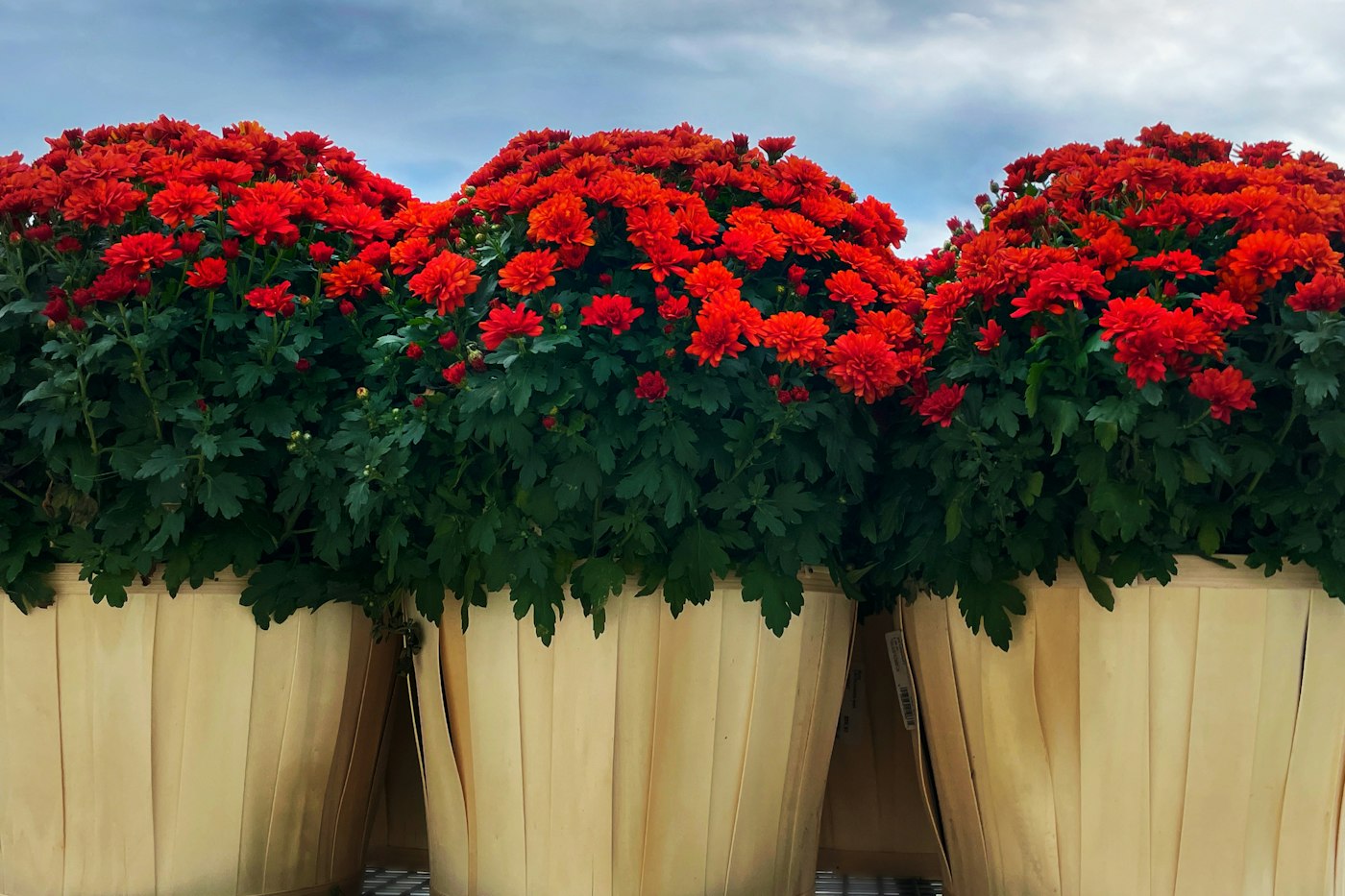
Mums in full bloom don’t need feeding. In fact, fertilizer at this stage mostly pushes leaves, not flowers.
How to Make Mums Last Longer
- Pinch off faded flowers to keep the plant tidy.
- Keep pots away from dryer vents, grills, and hot pavement.
- Bring pots into a garage or porch on nights below about 28°F, especially if they’re still budding.
- Group pots together, because they hold moisture better as a cluster.
Mum Care for Plants You Want to Keep
Want your mums to return? Good mum care starts with planting them in the ground as early as you can. The goal is to give roots several weeks to settle in before the soil freezes.
- Choose a sunny spot with well-drained soil. Mums often die in winter from wet, soggy roots rather than cold.
- Loosen the root ball before planting, then water well.
- Leave the dead stems standing over winter. They help trap snow and protect the crown.
- After the ground freezes, add 3 to 4 inches of straw or shredded leaves around the base.
- In spring, cut back the old stems once new growth appears.
In colder zones, potted mums can also spend winter in an unheated garage. For tips, see our guide on how to overwinter potted plants.
Getting Bushy Plants Next Year
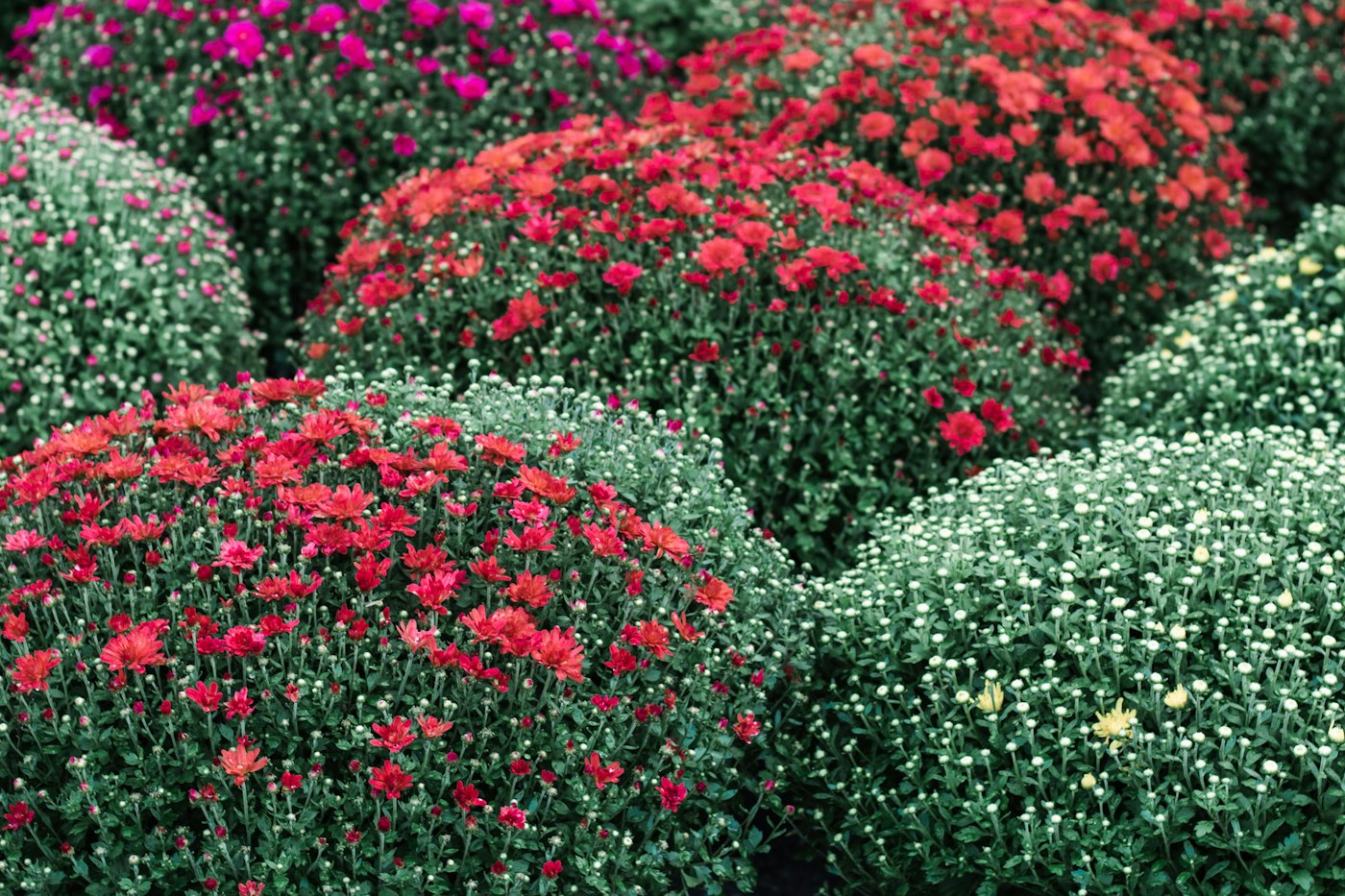
Garden mums naturally bloom as days get shorter. To get the classic dome shape, pinch back the stem tips by about an inch every few weeks in spring and early summer. Then stop pinching around early July, so flower buds have time to form.
If you skip pinching, plants still bloom. However, they’ll be taller and floppier.
Pairing Mums With Other Fall Plants
Mums look great with ornamental grasses, asters, and late-season perennials. Coneflowers left standing for their seed heads add texture, too; see our guide to coneflower care. For more seasonal tasks, check our list of fall garden chores.
FAQ
Why are my mums turning brown?
Usually, the plant dried out. Brown, crispy flowers and leaves are a common sign of underwatering. Still, too much water in a pot without drainage causes browning, too.
Can mums grow indoors?
For a short time, yes. Mum care indoors is simple: bright light, cool temps, and steady water. Even so, most garden mums prefer living outside.
Do mums attract pollinators?
Single-flowered types with open centers attract bees and butterflies. Heavily doubled types offer less pollen.