

Tiny tomato transplants look lonely in a big bed, so it’s tempting to squeeze in a few extra. By August, though, those crowded plants turn into a humid jungle where diseases spread fast and fruit is hard to reach. Getting tomato plant spacing right from the start is one of the simplest ways to improve your harvest.
The right tomato plant spacing depends on the variety and how you support it. Here are the numbers.
Tomato Plant Spacing Chart
- Staked, pruned to one or two stems: 18 to 24 inches apart, rows 3 to 4 feet apart.
- Caged indeterminate tomatoes: 24 to 36 inches apart, rows 4 feet apart.
- Determinate (bush) tomatoes: 24 inches apart, rows 3 feet apart.
- Sprawling, unsupported plants: 3 to 4 feet apart, rows 4 to 5 feet apart.
- Raised beds: One plant per 2-by-2-foot area if staked, or one per 3-by-3-foot area if caged.
- Containers: One plant per pot, 5 gallons for cherry types and 10 to 15 gallons for full-size tomatoes.
Always measure from stem to stem, not from the edge of the leaves.
Why Spacing Matters So Much
Airflow Prevents Disease
Early blight, septoria leaf spot, and late blight all spread on wet leaves. Therefore, plants with space between them dry off faster after rain and morning dew. That one change can prevent many cases of tomato leaves turning yellow.
Roots Need Room
Tomato roots spread 2 feet or more in every direction. When plants are too close, roots compete for water and nutrients. As a result, both plants produce less.
You Need Room Too
Good tomato plant spacing also lets you reach in to prune, tie, and harvest without breaking stems.

How Support Changes Spacing
Stakes keep plants narrow, so you can plant closer. In fact, pruning to a single stem allows 18-inch spacing. Our guide on how to prune tomato plants explains how to train them.
Cages, on the other hand, let plants grow wider and bushier. Give caged plants at least 2 feet, and 3 feet for vigorous heirlooms. Sprawling plants with no support need the most room of all.
Spacing in Raised Beds
A 4-by-8-foot raised bed fits about four to six staked tomatoes, or three to four caged ones. Put them along the north side of the bed in North America, so they don’t shade shorter crops. In South America and other Southern Hemisphere gardens, use the south side instead. Our raised bed garden layout guide has sample plans.
What About Companion Plants?
You can tuck low crops between tomatoes, as long as they don’t crowd the base. Basil, lettuce, and marigolds work well. However, keep them at least 12 inches from tomato stems so air can still move.
Common Spacing Mistakes
- Planting for the transplant size: A 6-inch seedling can become a 6-foot plant.
- Ignoring the variety: Indeterminate heirlooms need much more room than compact bush types.
- Crowding containers: Two plants in one pot means less fruit from both. Instead, follow our tips for growing tomatoes in pots.
- Narrow paths: Leave at least 2 feet between rows so you can walk and harvest.
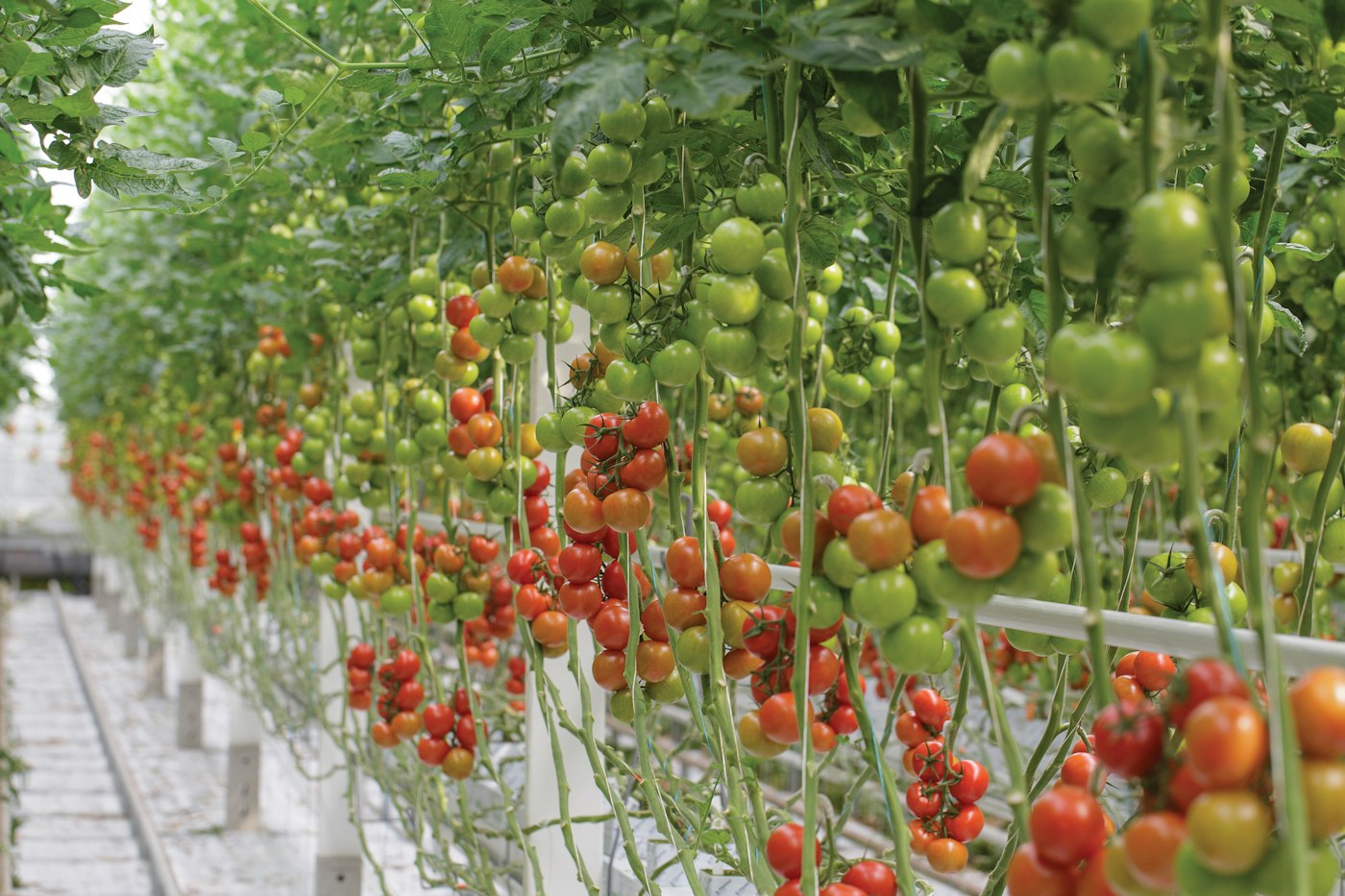
Spacing in Hot, Humid Climates
In humid regions, such as the U.S. Southeast or coastal Brazil, err on the wide side. Extra airflow makes a big difference when leaf diseases thrive. In hot, dry areas, by contrast, slightly closer spacing helps plants shade each other’s fruit and soil.
Learn More
The UC Statewide IPM tomato page shows common diseases that good spacing helps prevent.
FAQ
Can I plant tomatoes 12 inches apart?
Only if you prune hard to a single stem and stake each plant. Otherwise, 12 inches is too close.
How many tomato plants fit in a 4×4 raised bed?
About four staked plants or two to three caged plants, depending on the variety.
Does tomato plant spacing affect yield?
Yes. Crowded plants produce less per plant and get more disease, so proper spacing usually gives a larger total harvest.
