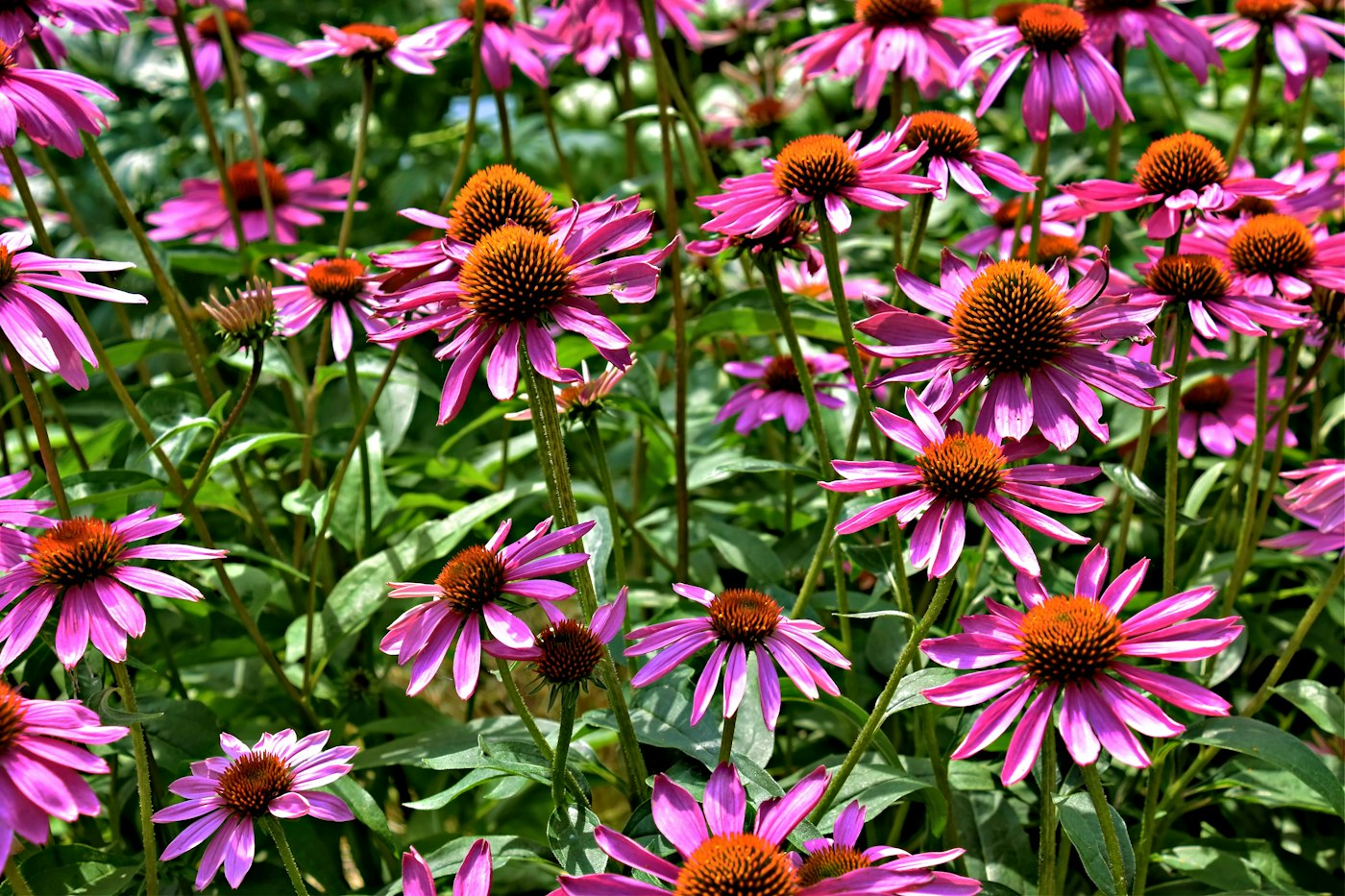
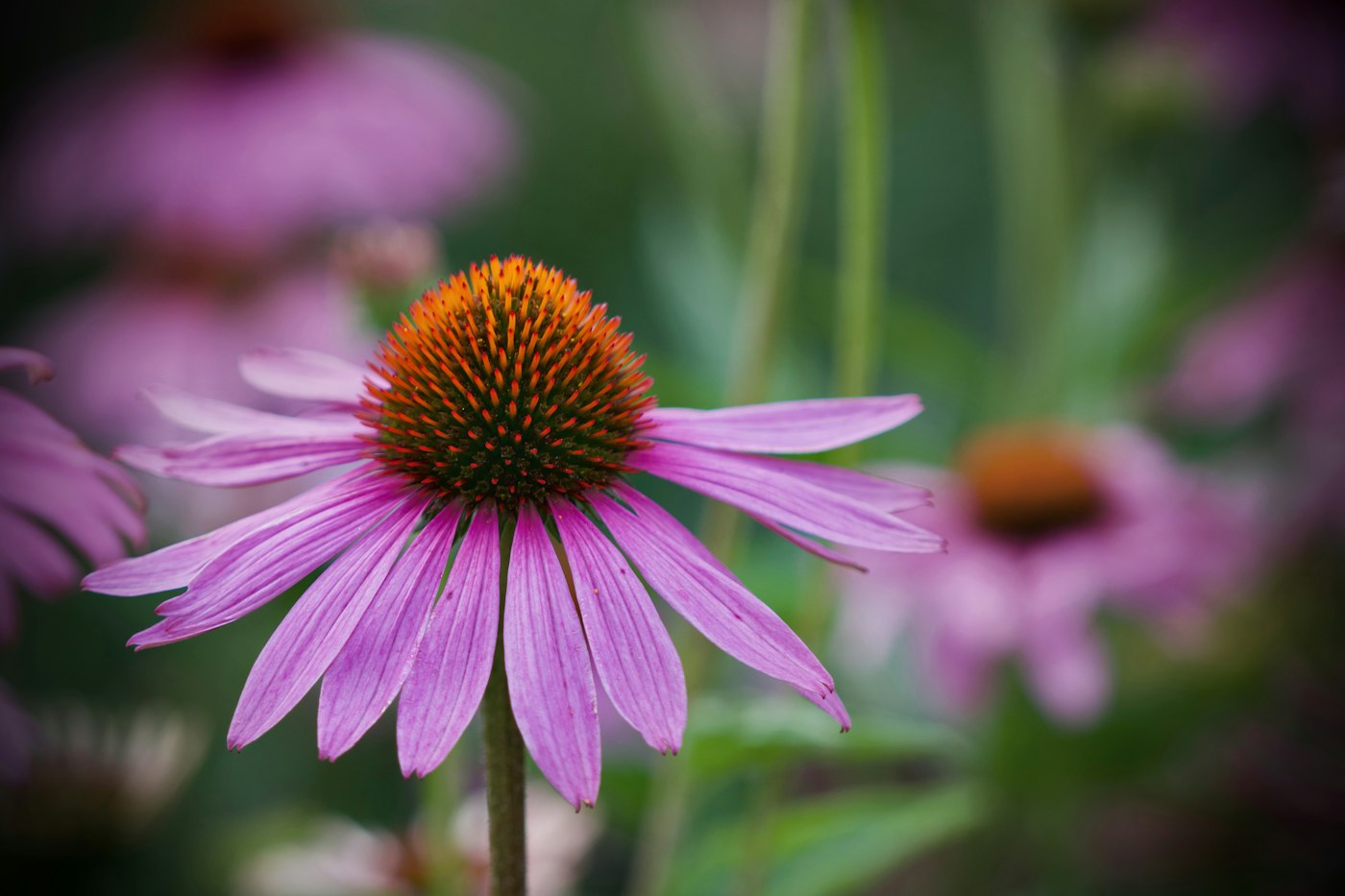
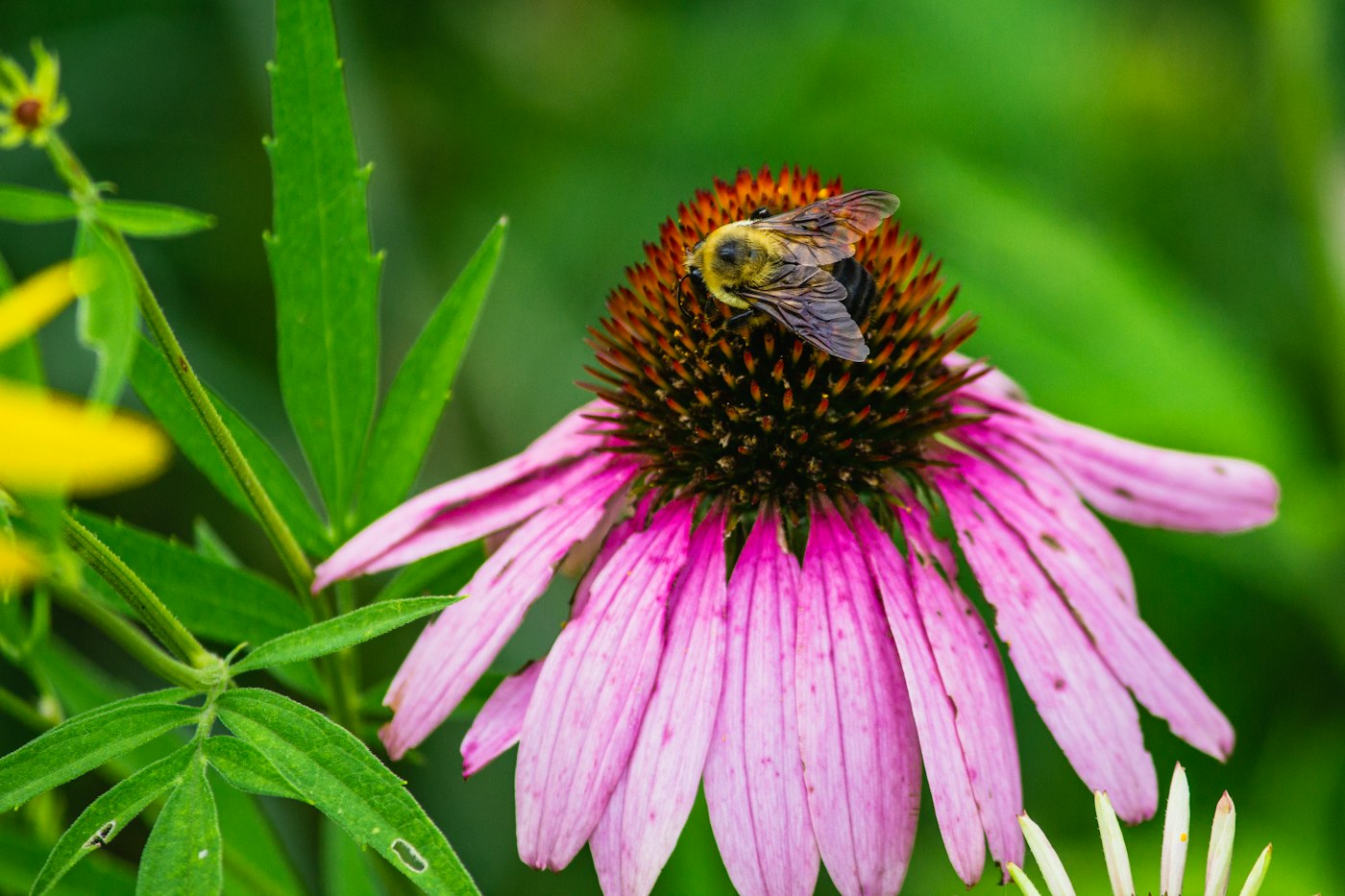
Purple coneflower is about as close to a no-fail perennial as you’ll find. It handles heat, humidity, and drought, and it feeds bees all summer and goldfinches all fall. Still, a few coneflower care habits make the difference between plants that fade after two years and clumps that come back for a decade.
Here’s what echinacea needs, from planting day to winter.
Coneflower Basics
- Botanical name: Echinacea purpurea (and other Echinacea species)
- Hardiness: USDA zones 3 to 9
- Size: 2 to 4 feet tall, 1.5 to 2 feet wide
- Bloom time: Early summer into fall
- Light: Full sun; tolerates light afternoon shade
- Native range: Central and eastern North America
Where and When to Plant
Coneflowers want at least six hours of sun. In too much shade, they stretch, flop, and bloom less. Average, well-drained soil is perfect. In fact, rich soil and heavy fertilizer often make them weaker.
Plant in spring or early fall, at least six weeks before the ground freezes. Space plants 18 to 24 inches apart so air can move between them. As a result, you’ll see fewer leaf diseases.
Coneflower Care Through the Seasons
Watering
Water new plants weekly during their first summer. After that, coneflowers rarely need help except during long droughts. In fact, overwatering causes more deaths than dry weather does.
Fertilizing
Skip it in most gardens. If your soil is very poor, a thin layer of compost in spring is plenty.
Deadheading
Cutting off faded flowers encourages more blooms through summer. However, stop deadheading by late August. The seed heads that form afterward feed goldfinches and other birds through fall and winter.
Dividing
Coneflowers grow from a crown with a taproot, so they don’t need frequent division. If a clump gets crowded after four or five years, divide it in early spring. Otherwise, leave it alone.
Why Some Coneflowers Don’t Come Back
Many gardeners notice that fancy hybrid coneflowers vanish after a year or two. There are a few reasons:
- Too much bloom, too soon: Some hybrids flower so heavily in year one that they never build strong roots. Pinching off the first flowers on new plants helps.
- Wet winter soil: Crowns rot in soggy clay. Therefore, good drainage matters more than cold.
- Weaker genetics: Straight species Echinacea purpurea and proven varieties like ‘Magnus’ and ‘White Swan’ are usually the longest-lived.
For reliable, long-lived plants, good coneflower care starts with choosing tough varieties.
Pests and Problems
Coneflowers have few serious problems. That said, watch for these:
- Aster yellows: Flowers turn green and twisted, with odd tufts of growth. There’s no cure. Pull and destroy affected plants so leafhoppers don’t spread it.
- Japanese beetles: Hand-pick them into soapy water in the morning.
- Powdery mildew: A white coating on leaves in humid weather. Better spacing usually prevents it.
Great Partners for Coneflowers
Coneflowers shine next to other sun-loving natives. Try them with black-eyed Susans, little bluestem grass, and orange butterfly weed. Together, they form the backbone of a pollinator garden plan that blooms from June to frost.
Fall and Winter
Leave stems and seed heads standing. Birds eat the seeds, and the stems shelter insects. Then cut everything back to the ground in early spring, before new growth appears. Our fall garden chores guide explains which plants to leave and which to clean up.
Growing Coneflowers in South America
Echinacea grows well in cooler parts of South America with distinct seasons, such as central Chile, much of Argentina, and southern Brazil. In hot, humid lowland tropics, it tends to be short-lived. There, gardeners often treat it as an annual or choose heat-loving alternatives.
Learn More
See the North Carolina Extension Gardener’s purple coneflower profile for more varieties and wildlife value.
FAQ
Do coneflowers spread?
Yes, slowly, mostly by seed. Deadheading reduces seedlings if you don’t want them.
Are coneflowers deer resistant?
Mostly. Deer usually avoid the bristly leaves, although hungry deer may nibble young plants.
Can I grow coneflowers in pots?
Yes. With basic coneflower care, a deep pot and fast-draining mix work well. In cold zones, move the pot into an unheated garage for winter.