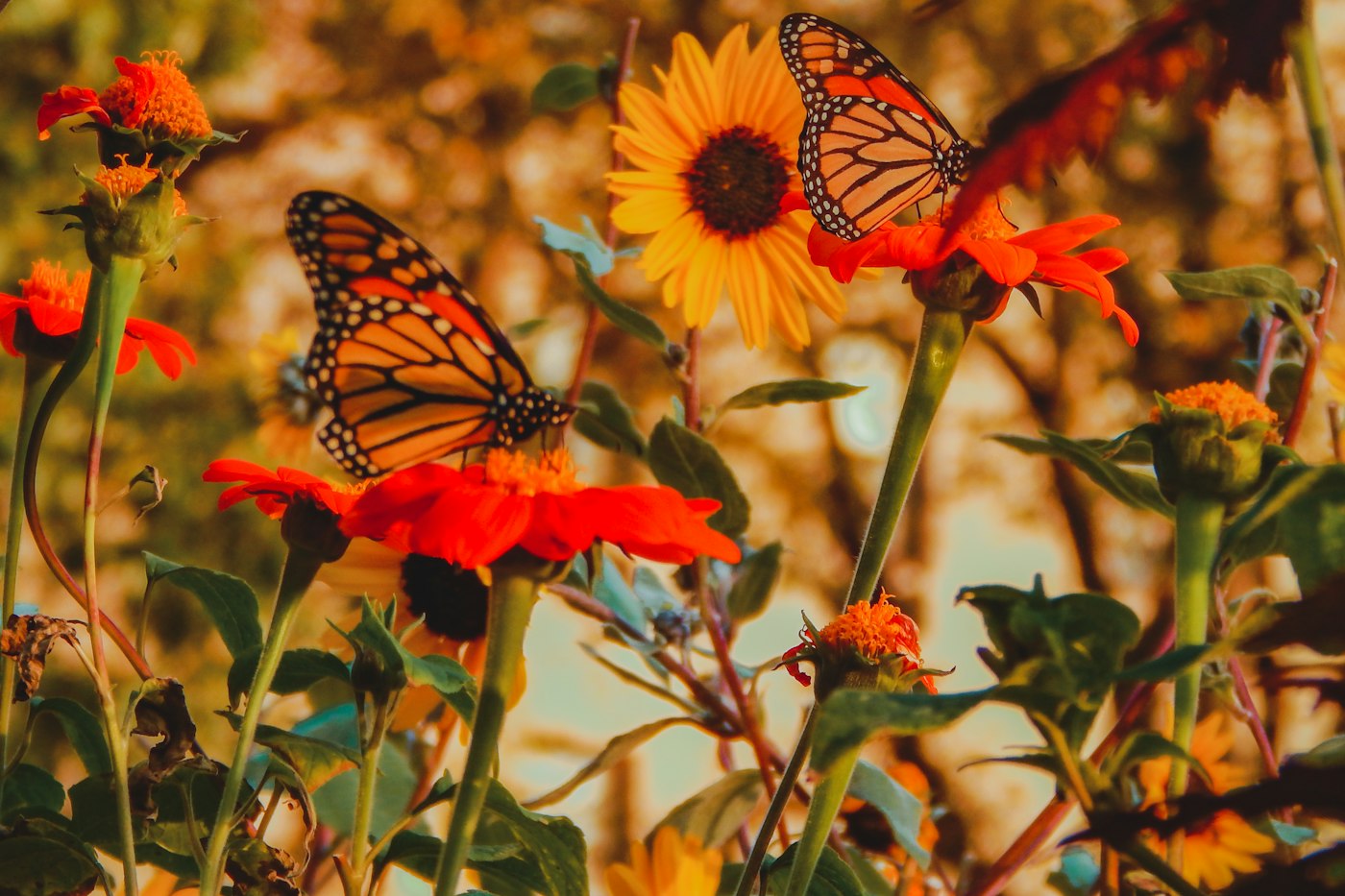
Bees, butterflies, and hummingbirds don’t need a perfect garden. They need food from spring to fall, water, and a little shelter. A good pollinator garden plan delivers all three in a space as small as a few square yards.
Here’s how to design one step by step, whether you’re working with a sunny backyard, a front-yard strip, or a few big containers.
Step 1: Pick a Sunny Spot
Most pollinator plants flower best in full sun, meaning six or more hours a day. Bees also prefer sheltered spots where wind doesn’t knock them around. A bed along a fence or the south side of a house is ideal in North America. In the Southern Hemisphere, choose a north-facing spot.
Step 2: Decide on the Size and Shape
Start small. For most yards, a 4-by-8-foot bed is enough to make a difference and easy to maintain. Moreover, curving edges look more natural than straight ones and make room for more plants. If you’re converting lawn, simply smother the grass with cardboard and mulch in fall, then plant in spring.
Step 3: Choose Native Plants
Native plants feed native bees and butterfly caterpillars far better than most exotic flowers. For example, monarch caterpillars eat only milkweeds, such as butterfly weed. Start your pollinator garden plan with five to eight native species. A few reliable choices across much of North America:
- Spring: Golden Alexanders, wild columbine, phlox
- Early summer: Beardtongue (Penstemon), coreopsis, butterfly weed
- Midsummer: Purple coneflower, bee balm, black-eyed Susan
- Late summer and fall: Goldenrod, asters, mountain mint
Look up lists for your region through Audubon’s native plants database, which sorts plants by ZIP code.
Step 4: Map Out Bloom Times
Gaps in bloom are the most common mistake in a pollinator garden plan. A garden that’s spectacular in July but bare in May and September doesn’t help much. Make a simple chart with spring, summer, and fall columns and make sure each has at least two or three plants in flower.
Early spring is the hardest season to fill. Crocus, grape hyacinth, and other early bulbs help bridge the gap. Here’s how to plant spring bulbs this fall for next year’s first bees.
Step 5: Plant in Groups
Pollinators find big patches of one flower more easily than single plants scattered around. Plant in clumps of at least three of the same species, or drifts of five to seven in larger beds. Additionally, place taller plants at the back and shorter ones in front.
Step 6: Add Water and Shelter
- First, a shallow dish with pebbles gives bees and butterflies a safe place to drink.
- Also, bare, sunny patches of soil provide nesting sites for ground-nesting bees, which are the majority of native bees.
- Hollow stems left standing over winter shelter stem-nesting bees.
Step 7: Skip the Pesticides
Unfortunately, even organic sprays can harm bees and caterpillars. Instead, accept a little leaf damage. Many pests are kept in check by predators that move in once the garden matures.
A Sample Pollinator Garden Plan (4 x 8 Feet)
- Back row: 3 purple coneflowers, 3 asters
- Middle row: 3 bee balm, 2 butterfly weed, 3 black-eyed Susans
- Front row: 5 coreopsis, 3 low-growing native sedges
- Tucked in front: 20 crocus bulbs for early spring
Of course, adjust species for your region. Still, keep the structure of this pollinator garden plan: tall at the back, bloom in every season, and groups instead of singles.
Fall Cleanup the Pollinator-Friendly Way
Don’t cut everything to the ground in autumn. Seed heads feed birds, and stems shelter insects. As our fall garden chores guide explains, it’s better to leave most of it standing until spring.
Learn More
The National Wildlife Federation’s Garden for Wildlife program offers free resources and certification for wildlife-friendly yards.
FAQ
How big does a pollinator garden need to be?
Any size helps. In fact, even a few large pots on a balcony feed bees.
When should I plant a pollinator garden?
Spring and fall are both good. Fall planting gives roots time to establish before summer.
Do pollinator gardens attract wasps?
Some wasps visit flowers. However, most are calm while feeding and help control garden pests.