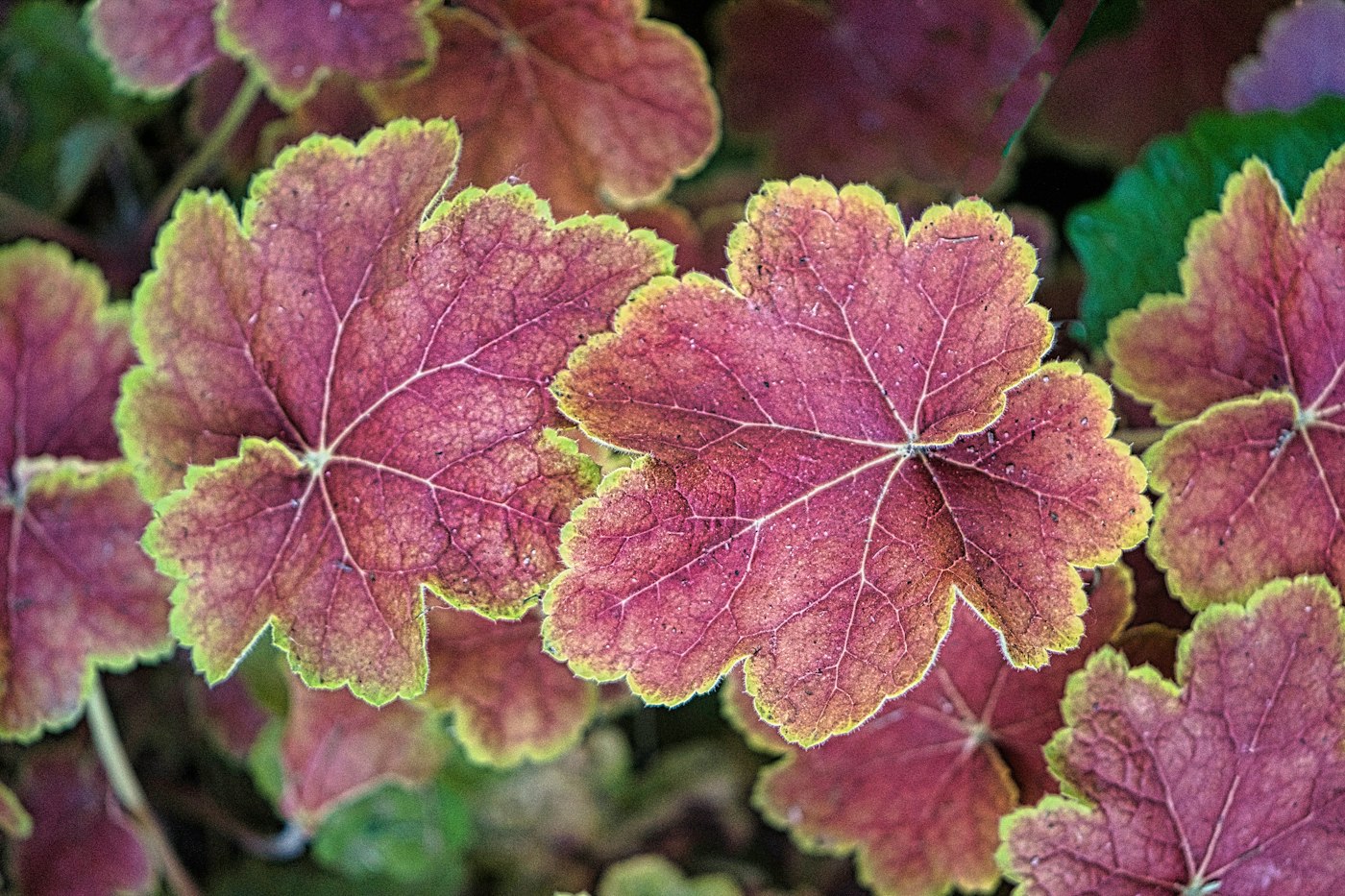

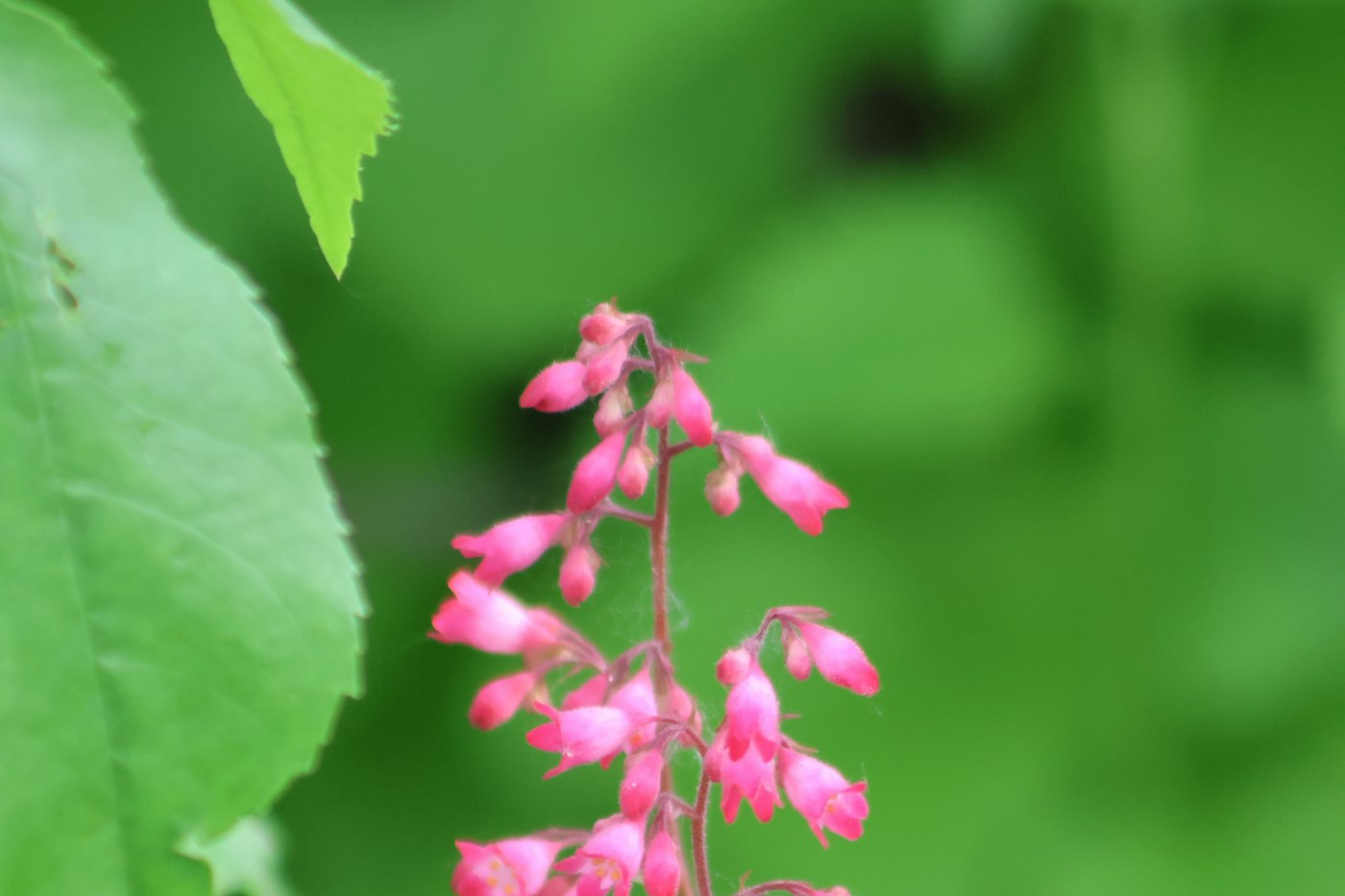
Coral bells are the easiest way to bring color into shade without relying on flowers. Their leaves come in purple, lime, caramel, silver, near-black, and every shade in between. In late spring, wiry stems hold tiny bell-shaped flowers that hummingbirds love.
Coral bells belong to the genus Heuchera. Several species are native to North America, including Heuchera americana in the East and Heuchera sanguinea in the Southwest. However, most garden plants are hybrids of these natives.
Coral Bells at a Glance
- Hardiness: USDA zones 4 to 9 (varies by variety)
- Size: 8 to 18 inches tall, 12 to 24 inches wide
- Light: Part shade; some varieties take more sun
- Soil: Well-drained, rich in organic matter
- Bloom time: Late spring to early summer
Light: Match the Leaf Color
Leaf color affects how much sun coral bells can handle. Dark purple and burgundy types generally tolerate more sun. On the other hand, lime, gold, and amber varieties scorch easily and do best in light shade. In hot southern summers, give all coral bells afternoon shade.
Planting Coral Bells
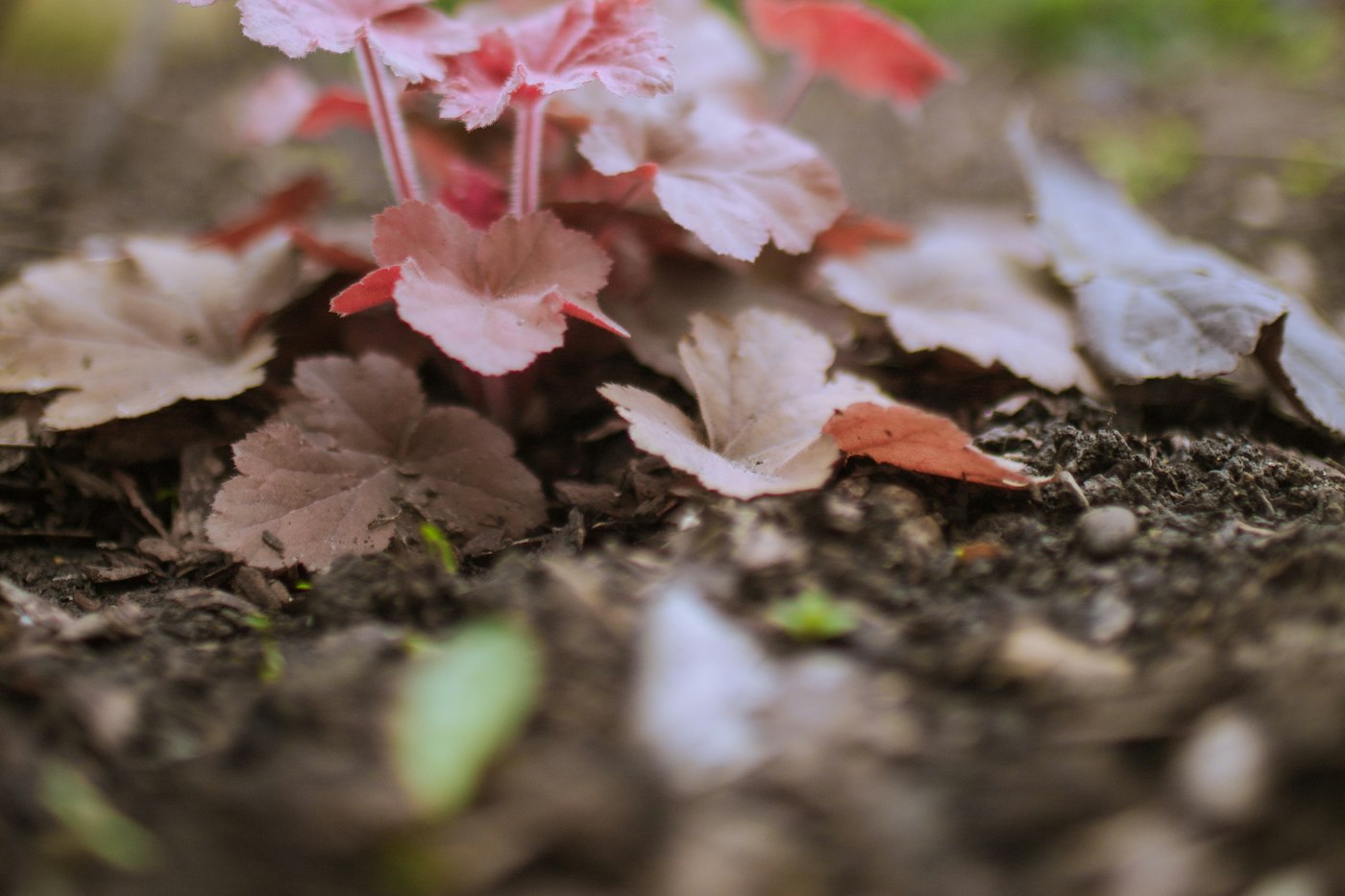
Above all, drainage is everything. Coral bells rot quickly in wet, heavy soil, especially in winter. Therefore, mix compost into the planting area, or plant them on a slight mound. They also do well in containers and along the edges of raised beds.
Then set the crown level with the soil surface, not below it. Space plants 12 to 18 inches apart, depending on mature width.
Caring for Coral Bells
Watering
At first, keep soil evenly moist through the first season. After that, water during dry spells. Coral bells tolerate brief dryness better than soggy soil.
Fertilizing
In most cases, a light layer of compost in spring is enough. Too much fertilizer leads to weak, floppy growth.
Cleaning Up Leaves
Coral bells are evergreen or semi-evergreen in many zones. In early spring, simply snip off any tattered or brown leaves. New foliage will quickly fill in.
Fix the Heaving Problem
The biggest complaint about coral bells is that they “pop out” of the ground. Over a few years, the crown grows upward on a woody stem. Then frost heaves it further, leaving bare stems exposed.
Fortunately, the fix is simple. Every three to four years, in spring or early fall, dig up the plant and replant it deeper so the crown sits at soil level. At the same time, you can divide large clumps into smaller pieces, each with roots and leaves.
Also, in cold zones a layer of mulch after the ground freezes also reduces heaving.
Great Companions
Coral bells pair beautifully with other shade plants. Try them in front of hostas, where their colorful leaves contrast with big green or blue foliage. Our hosta care guide covers how to build a shade bed around both. They also add early-summer nectar to a pollinator garden plan in partly shaded spots.
Popular Varieties
- ‘Palace Purple’: A classic with bronze-purple leaves that is also fairly sun tolerant.
- ‘Obsidian’: Near-black, glossy leaves.
- ‘Caramel’: Warm apricot foliage, so it makes a great contrast plant.
- ‘Lime Marmalade’: Bright chartreuse ruffled leaves for shade.
- Native Heuchera americana: Tough and long-lived, plus it has silvery-mottled leaves.
Coral Bells in South America
Heuchera is still relatively uncommon in South American nurseries, but it grows well where summers are mild, such as southern Chile, Patagonia, and highland areas. In hot, humid lowlands, it often struggles with rot. If you try coral bells there, give them excellent drainage and plenty of shade.
Learn More
The North Carolina Extension Gardener’s Heuchera profile lists species, cultivars, and growing conditions.
FAQ
Are coral bells deer resistant?
Mostly. In general, deer leave coral bells alone, although young plants may be nibbled.
Do coral bells spread?
No. Instead, they grow into slowly widening clumps that don’t run.
Can coral bells grow in full sun?
Some can in northern gardens, especially dark-leaved types, if the soil stays moist. In the South, they need afternoon shade.
