

A good raised bed garden layout saves you more work than any tool you’ll buy. It decides how far you walk, how easily you reach your plants, and how much sun each crop gets. Plan it well once, and every season after gets easier.
Here’s how to size your beds, space your paths, and arrange crops so the garden works with you instead of against you.
Start With Sun and Water
Before you sketch a raised bed garden layout, watch your yard for a day. Vegetables need at least six to eight hours of direct sun. Note where shadows from trees, fences, and the house fall in the morning and afternoon.
Next, find your nearest faucet. Beds close to water get watered more often, which makes a real difference in July. If you plan to add drip lines later, a short distance to the spigot keeps the setup simple.
Bed Size: The 4-Foot Rule
Keep beds no wider than 4 feet. That way, you can reach the middle from either side without stepping on the soil. Against a fence or wall, where you can only reach from one side, keep beds 2 to 3 feet wide.
Length is flexible. Eight feet is popular because standard lumber comes in 8-foot boards. Longer beds work, but they force you to walk all the way around them.
As for height, 10 to 12 inches suits most vegetables. Go 18 to 30 inches if you’d rather not bend, or if your native soil is very poor.

Path Width Matters More Than You Think
Narrow paths look efficient on paper. In real life, they’re frustrating. Aim for:
- 18 to 24 inches between beds for walking and kneeling.
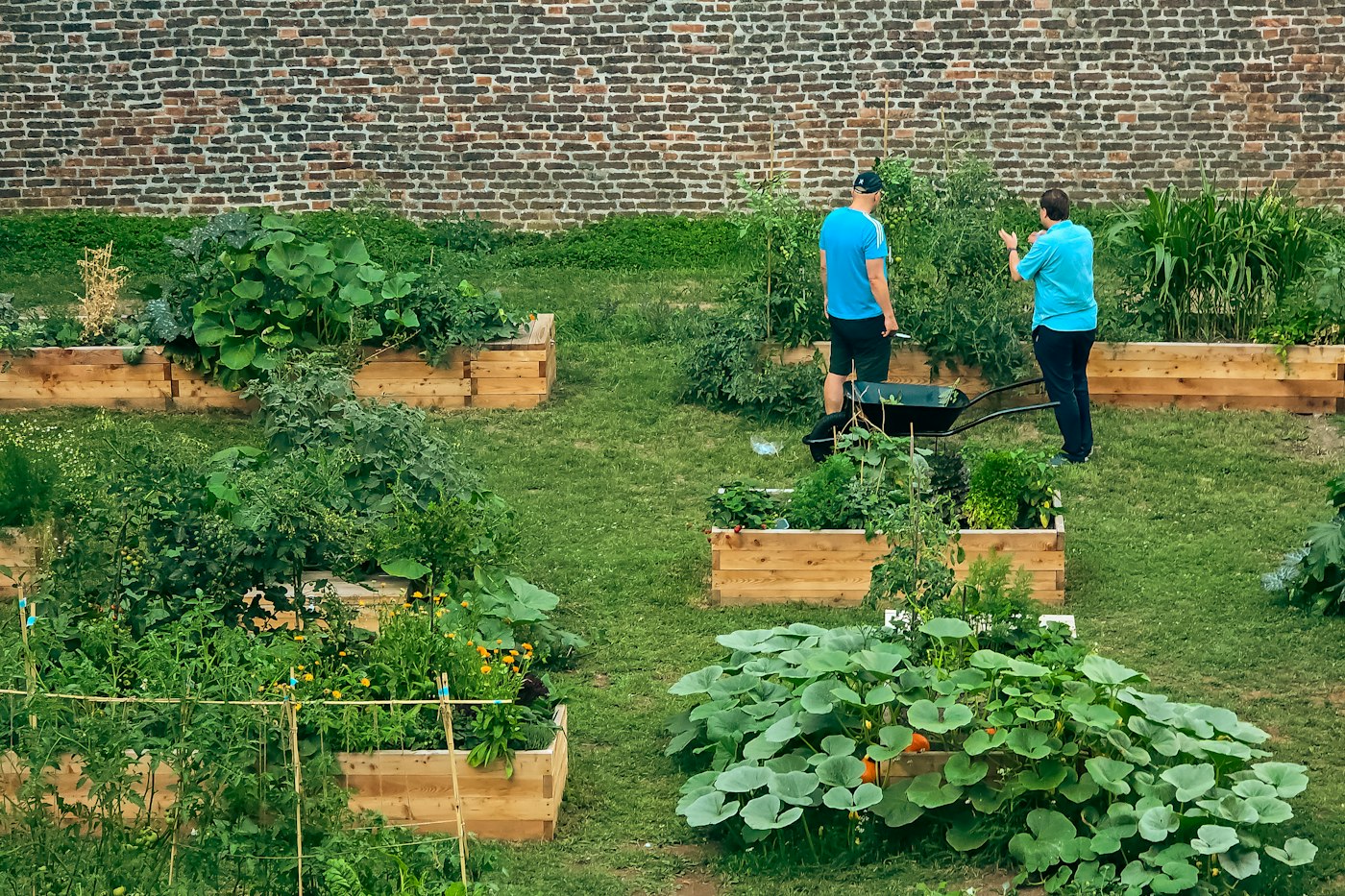
- 3 feet for at least one main path, so a wheelbarrow fits.
Cover paths with wood chips, gravel, or pavers. Bare soil turns to mud and invites weeds.
Raised Bed Garden Layout Ideas
The Classic Grid
Rows of identical rectangles are easy to build and easy to rotate crops through. For example, four 4-by-8 beds with 2-foot paths fit in a 14-by-20-foot space.
The Keyhole or U-Shape
A U-shaped bed wraps around you, so you can reach a lot of growing space from one spot. It works well in small yards and for gardeners who use a wheelchair or stool.
Potager Style
A potager mixes vegetables, herbs, and flowers in a symmetrical, decorative layout. Often there’s a central bed or birdbath with beds radiating out. It’s practical and pretty, which matters if your garden is in the front yard.
One Long Border Bed
If space is tight, a single long bed along a sunny fence gives you room for tomatoes and climbing beans on a trellis, with lettuce tucked in front.
Where to Put Each Crop
- Tall crops on the north side: Tomatoes, pole beans, and corn go on the north edge in North America so they don’t shade shorter plants. In South America and other Southern Hemisphere gardens, put them on the south side instead.
- Short crops in front: Lettuce, carrots, radishes, and herbs.
- Sprawling crops at the ends: Squash and melons can spill over a bed corner into a path you rarely use.
- Perennials in their own bed: Asparagus, rhubarb, and strawberries stay put for years, so don’t mix them into beds you rotate.
If you grow tomatoes in containers too, set the pots along the sunniest path. Our guide to growing tomatoes in pots explains how to keep them productive.
Plan for Rotation
Planting the same family in the same bed every year builds up pests and diseases. With four beds, rotate in this order: tomatoes and peppers, then beans and peas, then leafy greens, then root crops. Each family moves one bed over each year.
Garlic fits neatly into this plan too. It goes in during fall, after summer crops come out, and it’s harvested in early summer. Here’s how to plant garlic in fall.
Filling and Feeding Your Beds
A good mix is roughly 60 percent topsoil and 40 percent compost. Top up each bed with 1 to 2 inches of compost every year, since soil settles and breaks down. You can make your own; the EPA’s guide to composting at home covers the basics.
Common Layout Mistakes
- Beds too wide to reach across.
- Paths too narrow for a wheelbarrow or kneeling pad.
- Tall crops shading everything else.
- Beds placed far from water.
- Building more beds than you can maintain in the first year.
Start your raised bed garden layout with two or three beds. You can always add more next spring.
FAQ
Which direction should raised beds face?
Running beds north to south gives both sides even sun. That said, sun hours matter more than direction.
How far apart should raised beds be?
About 18 to 24 inches for walking, and 3 feet where you need a wheelbarrow.
What’s the best wood for raised beds?
Cedar and redwood resist rot naturally. Untreated pine is cheaper but usually lasts only a few years.
