
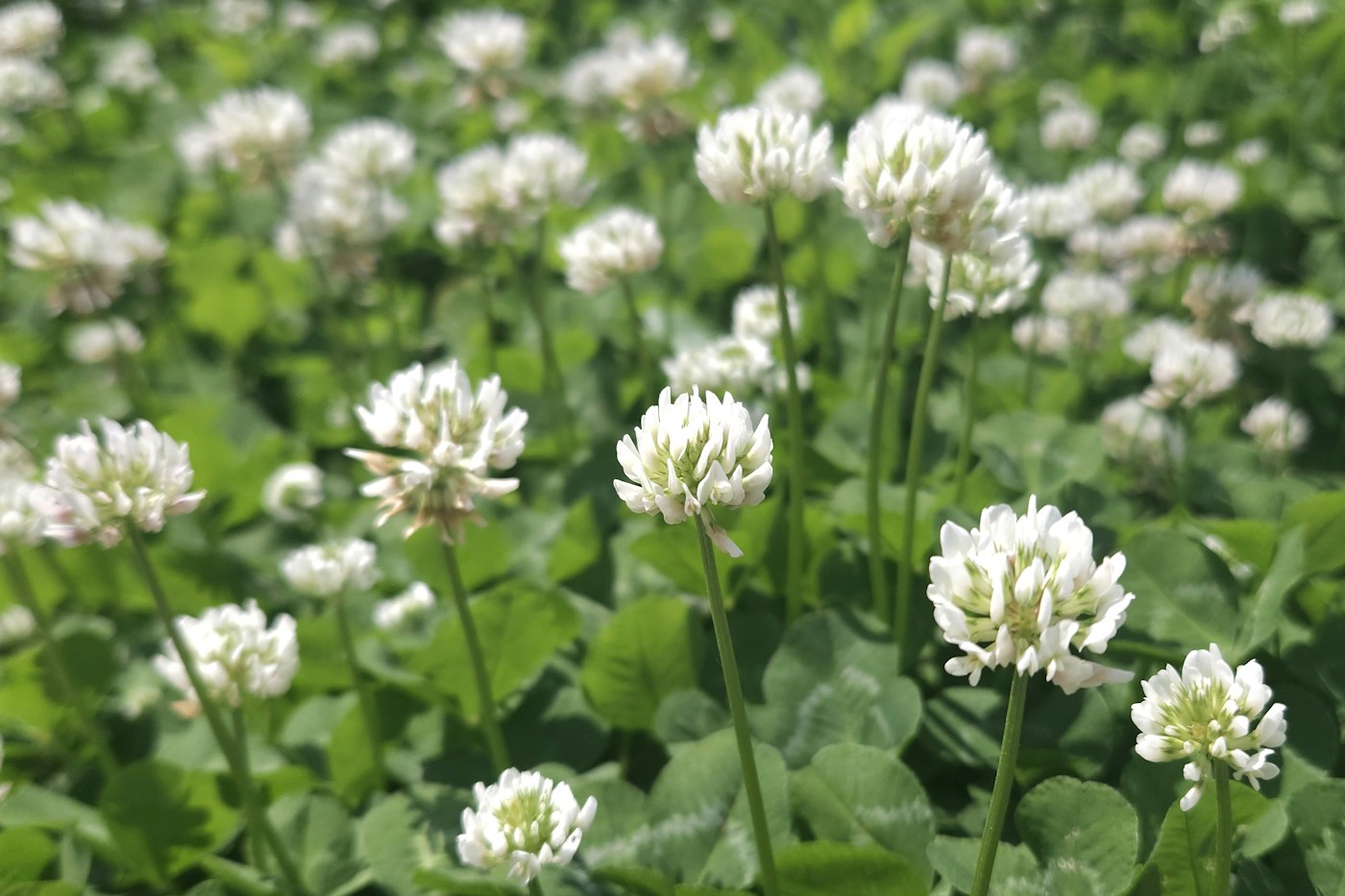
Fifty years ago, clover was a normal part of most lawn seed mixes. Then broadleaf weed killers made it an “enemy.” Today, more homeowners are going back. A clover lawn stays green in summer heat, needs less water and no fertilizer, and feeds bees. But it isn’t perfect for every yard.
Here’s an honest look at the pros, the cons, and how to plant one.
Types of Clover for Lawns
- White Dutch clover (Trifolium repens): The classic lawn clover. Low-growing and tough, with white flowers.
- Microclover: A selected form of white clover with smaller leaves and fewer flowers, so it blends better with grass.
- Red clover: Taller and short-lived, so it’s better for meadows than lawns.
Clover Lawn Pros
- No fertilizer needed: Clover pulls nitrogen from the air. In fact, it feeds the grass around it.
- Less water: Deep roots keep it green during dry spells when grass goes brown.
- Less mowing: Clover stays 4 to 8 inches tall, while microclover stays even shorter.
- Handles poor soil: Also, it grows in compacted, sandy, or clay soil.
- Pet-friendly: Dog urine doesn’t leave yellow spots the way it does on grass.
- Pollinator food: The flowers feed honeybees and native bees.

Clover Lawn Cons
- Bees in the yard: If kids play barefoot, stings are possible. However, mowing before bloom or choosing microclover reduces flowers.
- Less durable under heavy traffic: Pure clover wears down on sports fields and busy paths. A grass-clover mix holds up better.
- Stains: Clover leaves green stains on clothes more readily than grass.
- Not evergreen everywhere: In cold climates, it goes dormant and looks thin in winter.
- Short-lived in some areas: White clover may need reseeding every few years.
How to Plant a Clover Lawn
Overseeding an Existing Lawn
This is the easiest option. First, mow short and rake to expose soil. Then broadcast about 2 ounces of white clover seed, or 1 to 2 pounds of microclover, per 1,000 square feet. Mixing seed with sand helps spread it evenly. Finally, keep soil moist until seedlings appear, usually in a week.
Starting From Bare Soil
Loosen the soil, rake it smooth, and sow seed at about 4 to 8 ounces per 1,000 square feet. Alternatively, mix clover with a grass seed suited to your region. Press seed in with a roller or by walking over it, and water lightly every day until established.
When to Plant
Spring and early fall are best in most of North America. Soil should be at least 50°F. In the Southern Hemisphere, that means roughly September to November or March to April.
Caring for a Clover Lawn
- Mow to 3 to 4 inches, or less often if you like the flowers.
- Then water during long droughts only.
- Also, skip broadleaf herbicides, since they kill clover.
- Finally, overseed thin spots every couple of years.

Is a Clover Lawn Right for You?
Clover works best for homeowners who want a green, low-input yard and don’t need a perfect sports turf. It’s especially useful in dry, sunny areas and for anyone trying to cut water use. For more ideas, see our guide to drought tolerant landscaping. And if bees are part of the appeal, pair your lawn with a pollinator garden plan.
Learn More
The North Carolina Extension Gardener’s white clover profile covers growing conditions and uses.
FAQ
Will clover take over my grass?
In thin or low-fertility lawns, clover often spreads. In thick, fertilized turf, it stays a minor part of the mix.
Is a clover lawn safe for dogs?
White clover is generally considered safe, and it resists urine spots better than grass.
How long does a clover lawn take to fill in?
Usually one full growing season. Overseeded lawns show clover within a few weeks.

