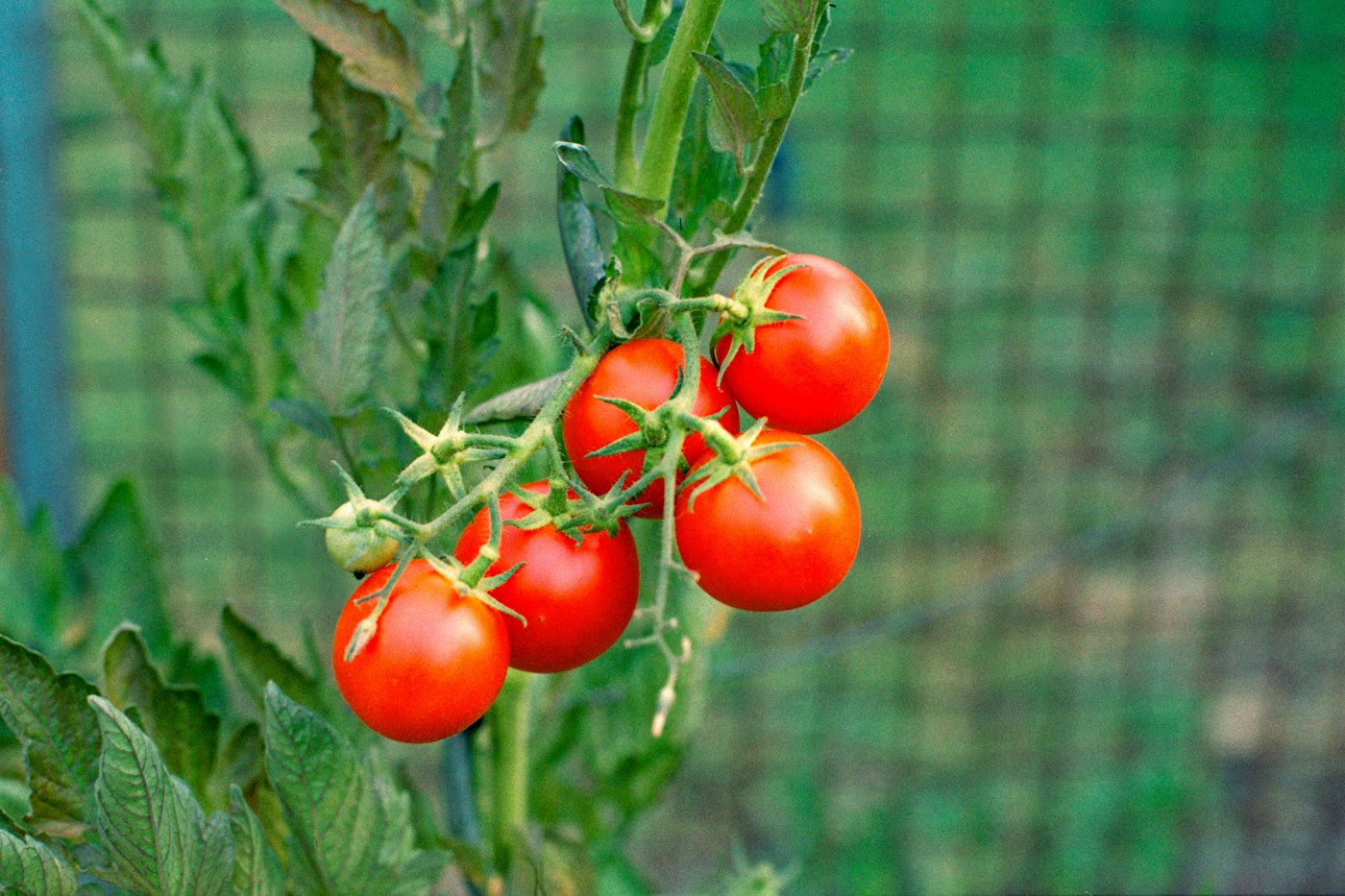

Some gardeners never prune tomatoes and still get a harvest. Others prune hard and swear by bigger, earlier fruit. Both can be right, depending on the variety and how you grow it. Learning how to prune tomato plants mostly comes down to one idea: control growth so the plant puts more energy into fruit and gets better airflow.
Here’s what to cut, what to leave, and when.
Determinate vs. Indeterminate: Why It Matters
- Determinate (bush) tomatoes: Grow to a set height, flower, and ripen most fruit within a few weeks. Examples include ‘Roma’, ‘Celebrity’, and ‘Bush Early Girl’. Because most flowers form at once, heavy pruning reduces your harvest.
- Indeterminate (vining) tomatoes: Keep growing and producing until frost. Most cherry tomatoes and heirlooms like ‘Brandywine’ are indeterminate. These benefit most from pruning.
Check the seed packet or plant tag. If it doesn’t say, assume it’s indeterminate.
What Is a Sucker?
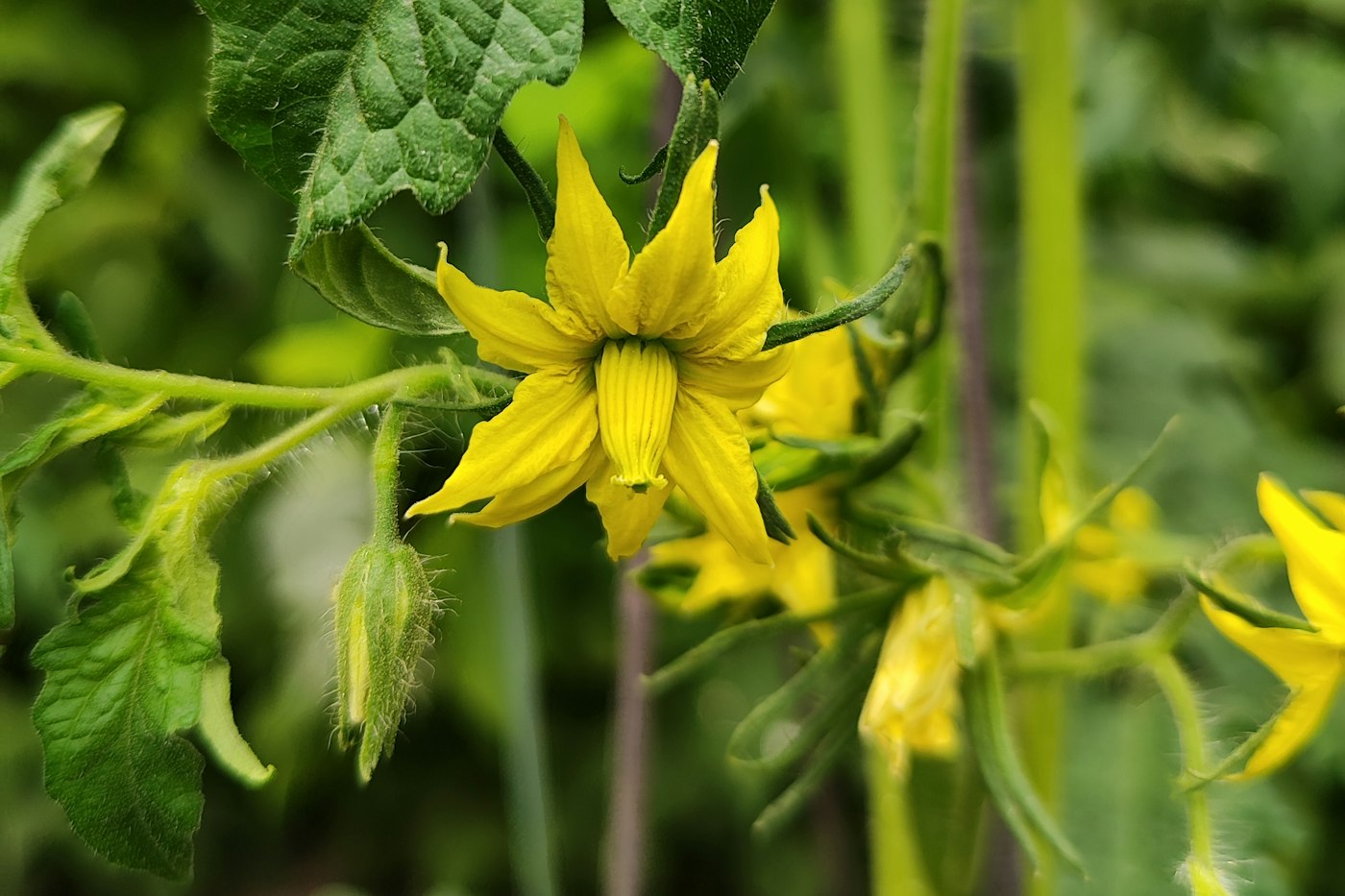
A sucker is a shoot that grows in the joint between the main stem and a leaf branch. Left alone, each sucker becomes another main stem with its own leaves and flowers. As a result, the plant turns into a dense tangle.
How to Prune Tomato Plants, Step by Step
1. Remove the Lowest Leaves
Once plants are about 2 feet tall, remove leaves touching the ground. These are the first to pick up soil-borne diseases. This alone prevents many cases of tomato leaves turning yellow from early blight.
2. Pinch Small Suckers
On indeterminate plants, pinch off suckers while they’re under 4 inches long. Use your fingers and snap them off cleanly. Small wounds heal fast.
3. Decide How Many Stems to Keep
- Single stem: Remove all suckers. Best for tall stakes and tight spacing.
- Two stems: Keep the sucker just below the first flower cluster. This is a good balance for most home gardens.
- Caged plants: Keep three or four stems and prune lightly.
4. Thin the Interior in Midsummer
If the center gets crowded, remove a few inner leaves to improve airflow. However, keep enough foliage to shade fruit from strong sun.
5. Top the Plant Late in the Season
About four weeks before your first expected frost, cut off the growing tip. Afterward, the plant stops making new flowers and ripens the fruit it already has.
What Not to Cut
- Flower clusters: These become your tomatoes.
- Too many leaves at once: Leaves make the sugar that sweetens fruit. Remove no more than about a quarter of the foliage at a time.
- Suckers on determinate plants above the first flower cluster: Leave them.
Pruning Tomatoes in Pots
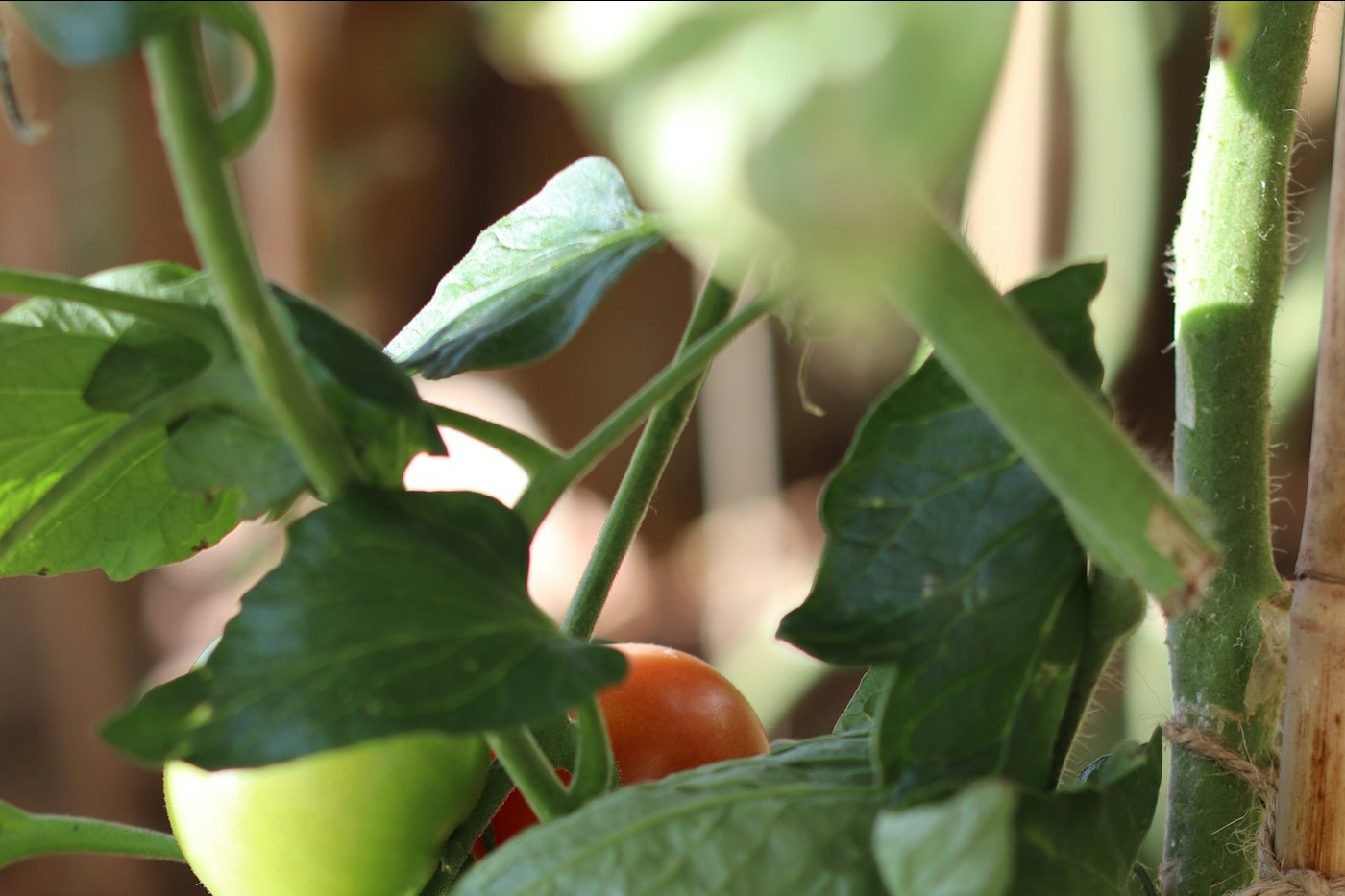
Knowing how to prune tomato plants matters even more in containers, because roots have limited space. Keeping one or two stems helps the plant support its fruit. For more on container care, see our guide to growing tomatoes in pots.
Tips for Clean Cuts
- Prune on dry, sunny mornings so wounds dry quickly.
- Use clean pruners for anything thicker than a pencil.
- Avoid working on wet plants, which spreads disease.
- Keep watering steady after pruning to avoid stress and blossom end rot.
Pruning in Hot Climates
In very hot, sunny regions, such as the Southwest or northern Brazil, prune more lightly. Extra leaves shade fruit and prevent sunscald. In humid climates, however, airflow matters more, so moderate pruning helps prevent disease.
Learn More
The North Carolina Extension Gardener’s tomato page has more on varieties and growth habits.
FAQ
Do I have to prune tomato plants?
No. Unpruned plants still produce. However, knowing how to prune tomato plants helps you get cleaner plants and earlier fruit.
Can I root tomato suckers?
Yes. Place a 4- to 6-inch sucker in water or moist soil, and it will root within a week or two.
When should I stop pruning?
Stop removing suckers in late summer, then top the plant about a month before frost.
