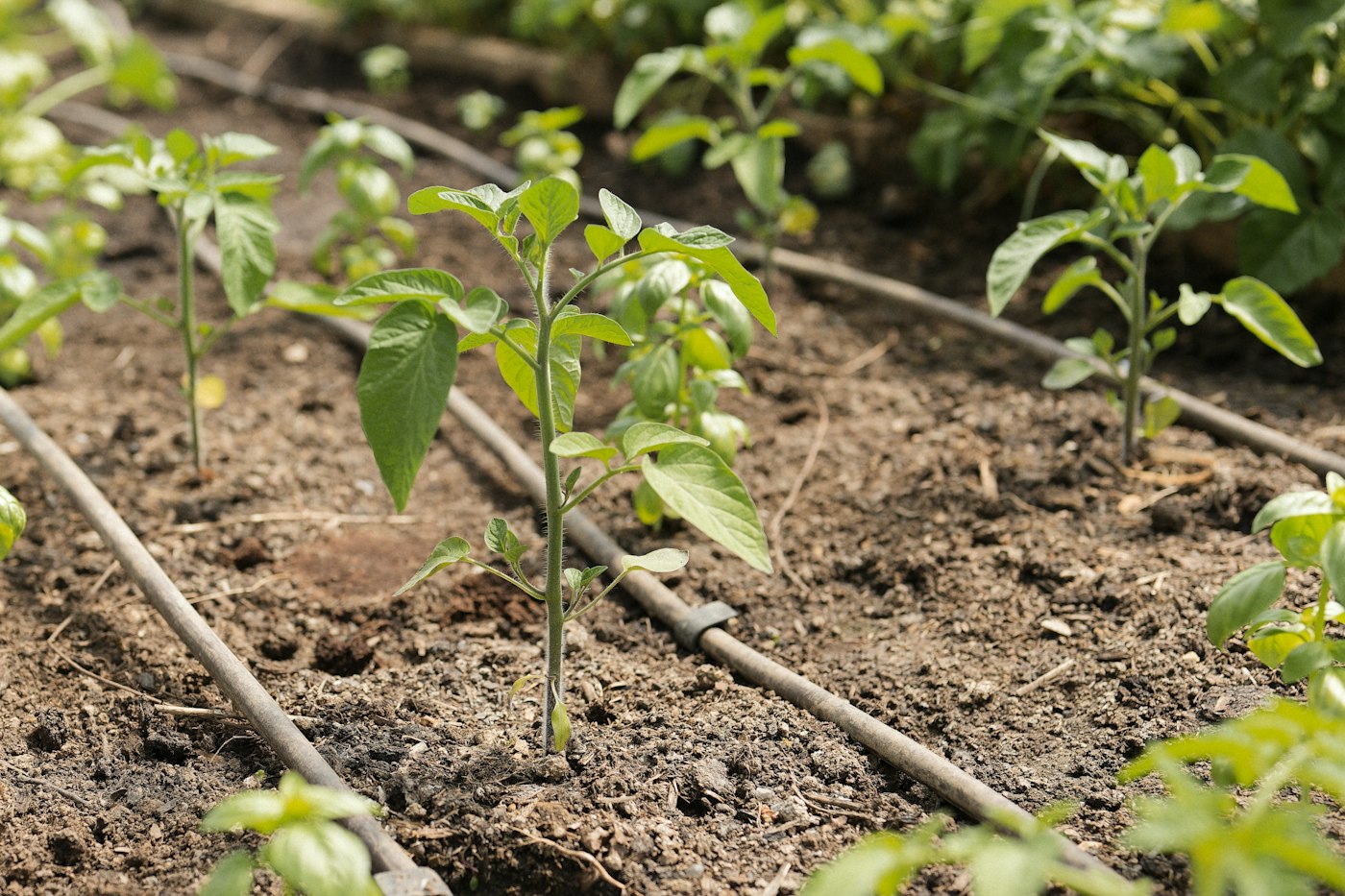

Hand-watering raised beds every evening gets old fast, especially in July. Drip irrigation for raised beds solves that. It delivers water slowly to the soil, right where roots need it, and it can run on a timer while you’re at work or on vacation.
A basic system costs less than a nice pair of pruners, and you can install it in an afternoon. Here’s how.
Why Drip Works So Well in Raised Beds
- Less water wasted: Very little is lost to wind, runoff, or evaporation.
- Fewer leaf diseases: Foliage stays dry, which matters a lot for tomatoes and squash.
- Fewer weeds: Paths stay dry, so weed seeds don’t sprout there.
- Consistent moisture: Steady water prevents cracked fruit and other stress problems.
What You’ll Need
- Backflow preventer
- Pressure regulator (usually 25 psi)
- Filter
- Hose-thread adapter
- Half-inch mainline tubing
- Quarter-inch drip line with built-in emitters, or emitter tubing
- Barbed connectors, end caps, and stakes
- Hole punch tool
- Battery-powered hose timer (optional but worth it)
Many hardware stores sell kits for drip irrigation for raised beds with all of these parts. That said, buying parts separately lets you match the system to your exact bed sizes.
How to Set Up Drip Irrigation for Raised Beds
1. Start at the Faucet
Attach the parts in this order: timer, backflow preventer, filter, pressure regulator, and finally the tubing adapter. This “head assembly” protects your plumbing and keeps grit out of the emitters.
2. Run the Mainline
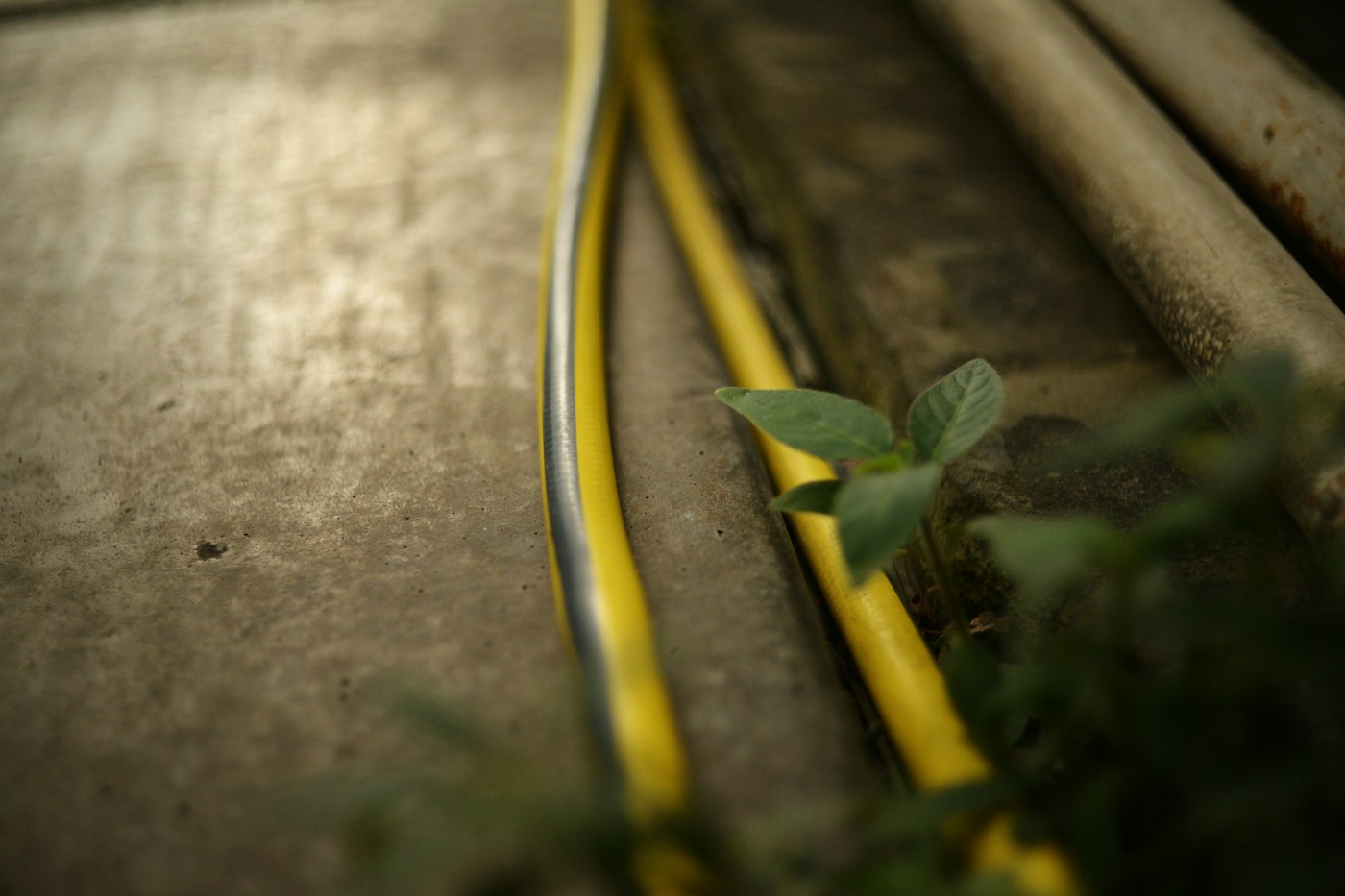
Lay half-inch tubing from the faucet to your beds. Then bring it up the side of each bed or under the path. Leaving tubing in the sun for an hour first makes it softer and easier to work with.
3. Lay Lines Across Each Bed
For a 4-foot-wide bed, run three or four drip lines lengthwise, spaced about 12 inches apart. Use lines with emitters every 6 to 12 inches. In sandy soil, space lines closer, since water spreads less sideways.
4. Connect and Cap
Punch a hole in the mainline, insert a barbed connector, and attach each drip line. Next, close the far ends with end caps or figure-eight closures. Pin everything in place with stakes.
5. Flush and Test
Before capping the final end, run water for a minute to flush out debris. Then cap it and check every emitter for a steady drip.
How Long Should You Water?
Run times for drip irrigation for raised beds depend on soil, weather, and emitter output. As a starting point, run the system for 30 to 45 minutes, two or three times a week in summer. After a run, dig down 6 inches. If the soil is moist at that depth, you’re on target.
Adjust with the season. Seedlings need short, frequent runs. In contrast, established tomatoes in midsummer need longer, deeper ones. Also, turn the timer off during rainy weeks.
Tips for a Trouble-Free System
- Cover drip lines with mulch to protect them from the sun and reduce evaporation.
- Clean the filter a few times a season.
- Before your first freeze, disconnect the head assembly and bring it indoors.
- Plan your layout before buying parts. Our raised bed garden layout guide helps you map beds and paths.
Drip Irrigation for Raised Beds in Hot Climates
In hot, dry regions, drip is often the only practical way to keep vegetables alive in summer. It’s equally popular in dry parts of South America, from Mendoza in Argentina to northern Chile. For more ways to cut outdoor water use, see our ideas for drought tolerant landscaping. And if you’re still planning beds, our guide to a small backyard vegetable garden pairs well with a drip system.
Learn More
The EPA WaterSense program has practical outdoor watering tips, including how timers and drip systems save water.
FAQ
Is drip better than a soaker hose?
Drip gives more even watering over long runs and lasts longer. Soaker hoses, on the other hand, are cheaper and simpler for one or two beds.
Can I run drip off a rain barrel?
Yes, but only with low-pressure drip tubing designed for gravity flow.
Will drip irrigation for raised beds work with a timer?
Yes. In fact, a simple battery hose timer is one of the best upgrades you can make.
