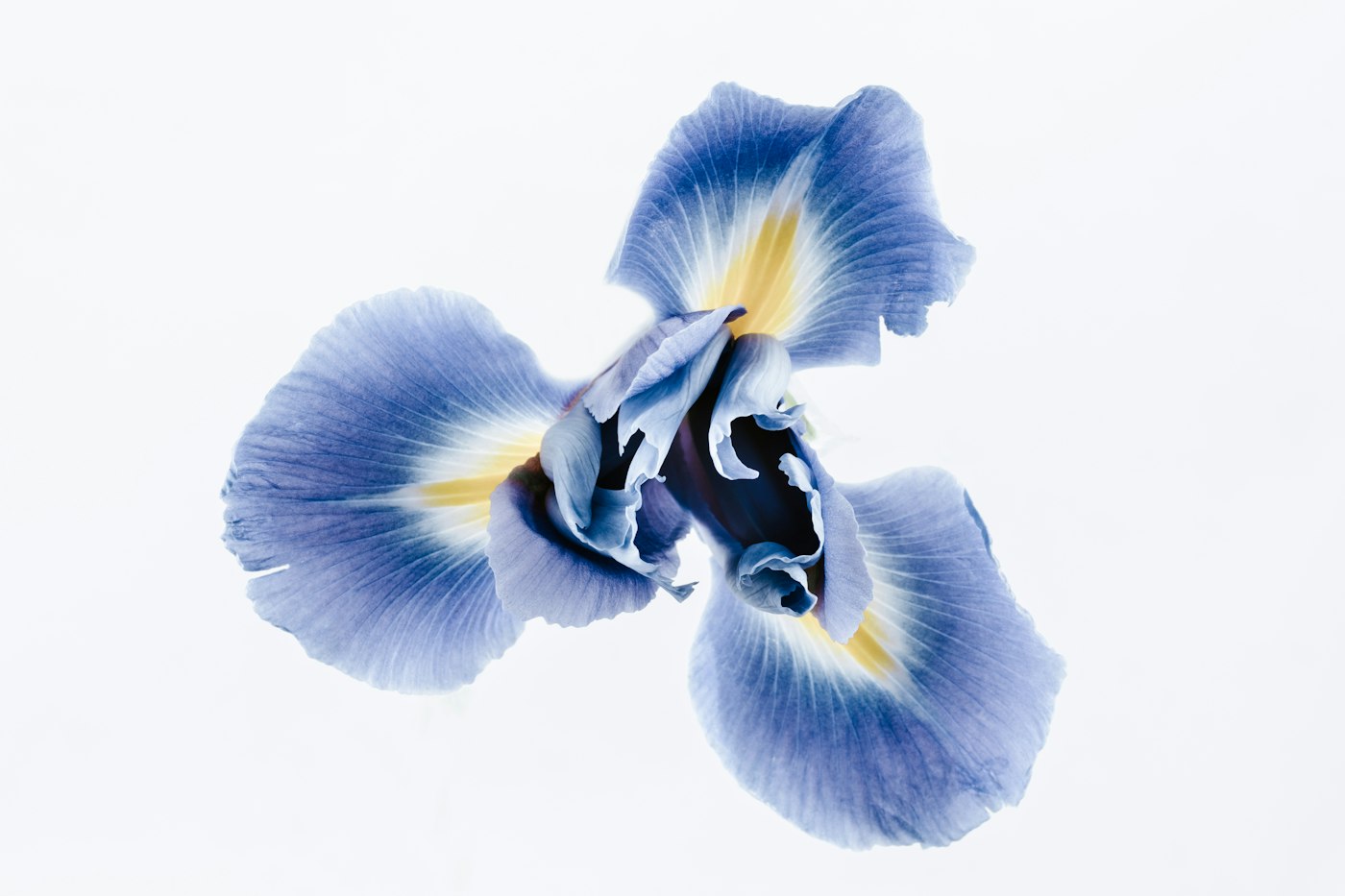

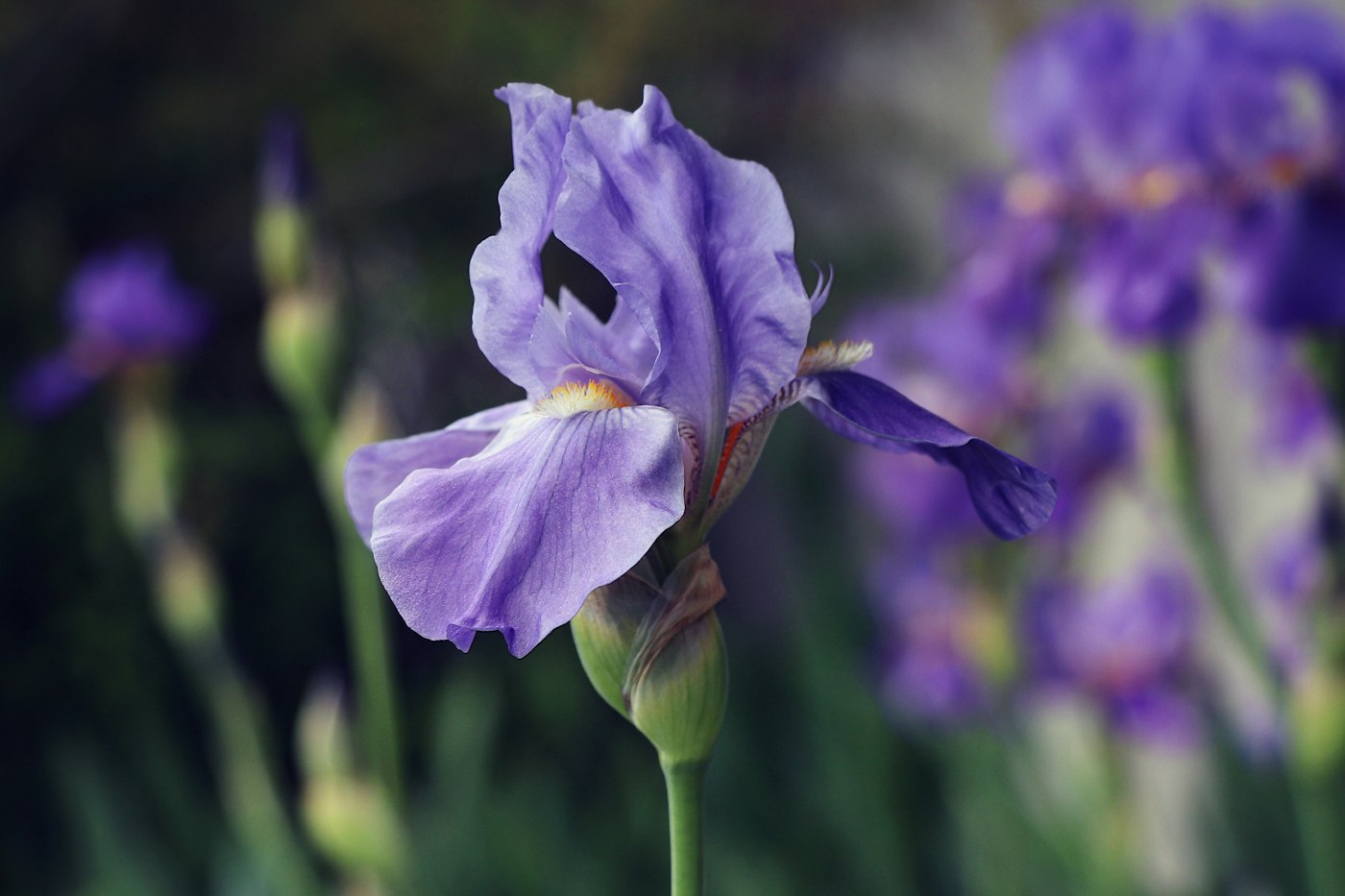
Most garden plants sulk in soggy ground. Blue flag iris, however, thrives there. This native iris grows wild in marshes, wet meadows, and pond edges from Manitoba and Newfoundland south to Virginia and the Great Lakes. In late spring, it opens violet-blue flowers veined with white and yellow.
If you have a low, wet spot that floods after storms, blue flag iris may be exactly the plant you need. Here’s how to grow it.
Blue Flag Iris at a Glance
- Botanical name: Iris versicolor (northern blue flag)
- Hardiness: USDA zones 3 to 9
- Size: 2 to 3 feet tall, spreading slowly
- Bloom time: Late spring to early summer
- Light: Full sun to part shade
- Soil: Wet to consistently moist; tolerates standing water up to about 6 inches
A close relative, southern blue flag (Iris virginica), grows farther south and looks very similar.
Where to Plant Blue Flag Iris
This iris shines in places where water collects. For example:
- Pond and stream edges
- Rain gardens and low swales
- Wet ditches and drainage areas
- Large containers or water garden pots
It also grows in regular garden beds, as long as the soil stays moist. However, it won’t flower as well in dry soil. Give it at least half a day of sun for the best blooms.
How to Plant
Plant in spring or early fall. Set the rhizomes, the thick horizontal roots, just below the soil surface. In ponds, place pots so the crown sits 2 to 6 inches under water. Space plants 18 to 24 inches apart. As a result, they’ll fill in to form a solid clump within a few years.
Caring for Blue Flag Iris
Water
In wet spots, nature does the work. In garden beds, though, water regularly during dry spells. Never let the soil dry out completely.
Fertilizer
It rarely needs any. In fact, fertilizer near ponds can feed algae.
Dividing
Every three to four years, after flowering, dig and divide crowded clumps. Each piece of rhizome needs a fan of leaves and some roots.
Cleanup
Then cut back brown foliage in late fall or early spring. Otherwise, the leaves stay attractive through much of the season.
Watch Out for Yellow Flag Iris
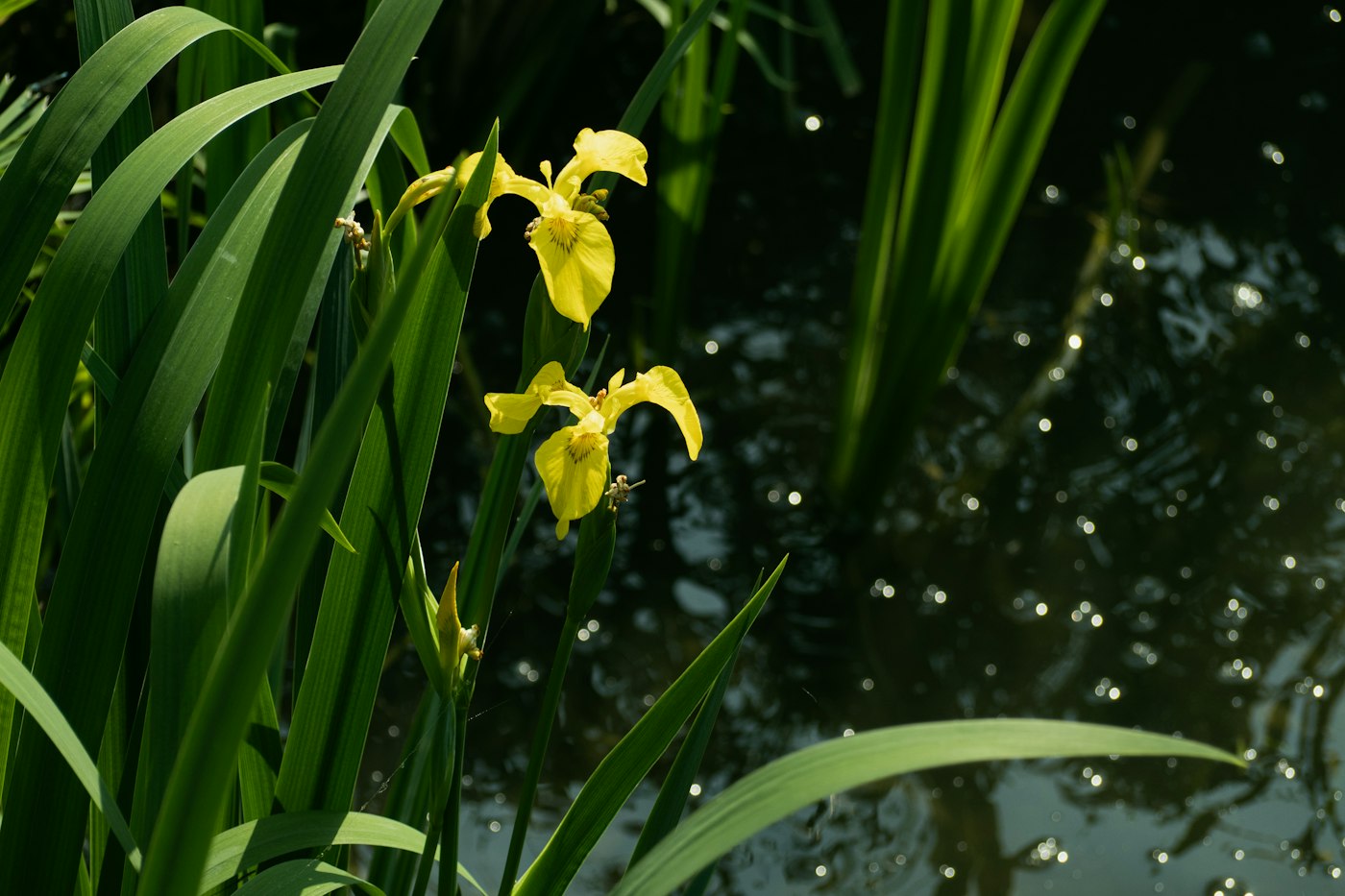
Yellow flag iris (Iris pseudacorus) looks similar but has bright yellow flowers. Unlike blue flag iris, it’s a European species and is invasive in wetlands across much of North America. It crowds out native plants and is restricted in several states and provinces. If you want an iris for wet ground, stick with the native blue flag.
Wildlife Value
Bumblebees and other long-tongued bees pollinate the flowers. In addition, the dense leaves give cover to frogs and other small wildlife at pond edges. It’s a natural fit for a pollinator garden plan in a damp corner.
Safety Note
Like many irises, blue flag iris is toxic if eaten, and handling the rhizomes can irritate sensitive skin. Wear gloves when dividing, and plant it where pets and children won’t chew it.
Companion Plants for Wet Spots
Pair it with other moisture-loving natives, such as swamp milkweed, cardinal flower, Joe Pye weed, and sedges. In slightly drier areas nearby, plants from our coneflower care guide fill in well. For more on handling runoff, the EPA explains how rain gardens soak up stormwater.
A Note for South America
Blue flag iris is native to North America and isn’t common in South American nurseries. For pond and wetland gardens there, ask local native plant nurseries for marginal plants from your own region. As always, avoid planting non-native species near natural waterways.
Learn More
See the North Carolina Extension Gardener’s blue flag iris profile for more growing details.
FAQ
Can blue flag iris grow in a regular garden bed?
Yes, if the soil stays consistently moist. Otherwise, it grows but blooms less.
Is blue flag iris invasive?
No. It’s native and spreads slowly. Yellow flag iris is the invasive look-alike.
When does blue flag iris bloom?
Usually from late May to early July, depending on your region.
