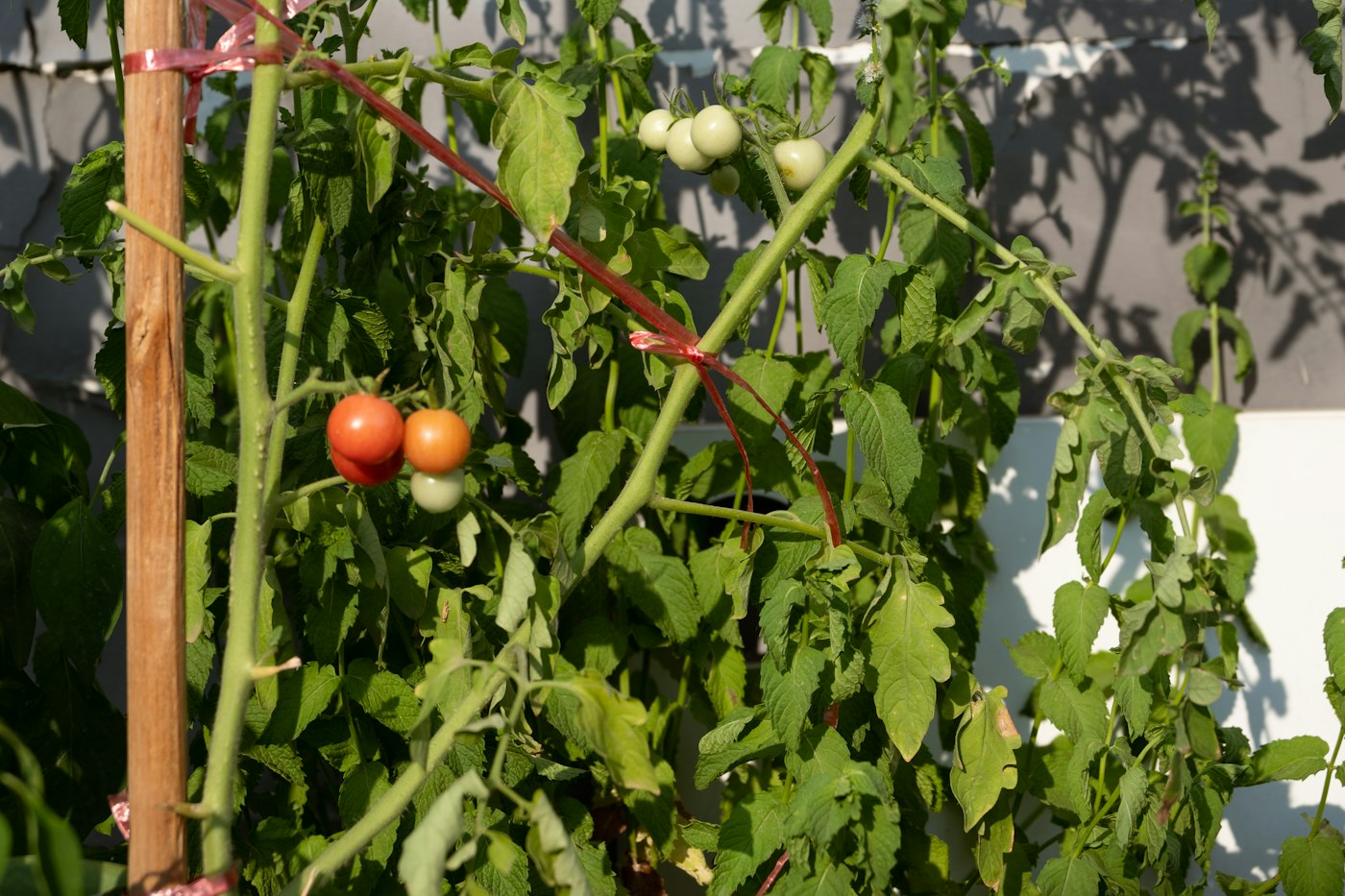

Tomatoes on the ground get eaten by slugs, split by wet soil, and spotted with disease. Supporting them keeps fruit clean and plants healthier. Learning how to stake tomatoes isn’t complicated, but choosing the right method for your variety makes the job much easier.
Here are the four main options, with the pros, cons, and setup for each.
Start by Knowing Your Variety
- Determinate (bush) tomatoes stop at 3 to 4 feet. Short cages or a single stake usually work.
- Indeterminate (vining) tomatoes keep growing until frost, often 6 to 8 feet. They need tall, strong support.
Install supports at planting time. Pushing stakes in later can damage roots.
Method 1: Single Stakes
This is the classic way to stake tomatoes. Drive a 6- to 8-foot wooden or metal stake about 12 inches deep, 3 to 4 inches from the plant. Then tie the main stem loosely to the stake every 8 to 12 inches as it grows.
- Pros: It’s cheap and space-saving, plus airflow is excellent.
- Cons: However, it needs regular tying and works best with pruned plants.
Single stakes pair well with pruning to one or two stems. Our guide on how to prune tomato plants shows how.

Method 2: Cages
Cages let the plant grow inside a wire frame with little tying. However, most store-bought cages are too short and flimsy for indeterminate tomatoes. Instead, choose heavy-duty cages at least 5 feet tall, or make your own from concrete reinforcing wire.
- Pros: Cages are low maintenance, so little pruning is needed.
- Cons: On the other hand, cages take more space and can tip over without anchoring.
Method 3: The Florida Weave
This method works well for rows. First, set a sturdy stake at each end of the row and one every two plants. Next, run garden twine along one side of the plants, around each stake, and back down the other side. Add a new line every 8 to 10 inches as plants grow.
- Pros: It’s fast and cheap, so it’s efficient for many plants.
- Cons: Still, it works best for determinate types under about 4 feet.
Method 4: Trellises and Strings
For tall indeterminate tomatoes, run a strong horizontal wire or beam 6 to 7 feet high. Then drop a string from it to each plant and gently wrap the stem around the string as it grows. Greenhouses use this method because it saves space.
- Pros: Very space-efficient and tidy.
- Cons: However, it requires pruning to one or two stems.

How to Tie Tomatoes Without Damage
- Use soft ties, such as strips of old T-shirts, Velcro plant tape, or twine.
- Tie in a loose figure-eight, with one loop around the stake and one around the stem.
- Leave room for the stem to thicken.
- Tie below a leaf branch, so the branch rests on the tie.
Spacing and Support Go Together
Staked plants can go closer together than caged ones. Our tomato plant spacing guide lists distances for each method. For containers, a single sturdy stake or compact cage works best; see our tips on growing tomatoes in pots.
Which Method Should You Choose?
- A few plants, little time: Heavy-duty cages.
- Small space and pruning: Single stakes or strings.
- Long rows of bush tomatoes: The Florida weave.
In short, knowing how to stake tomatoes is about matching support to plant size.
Learn More
For variety information, see the North Carolina Extension Gardener’s tomato profile.
FAQ
When should I stake tomatoes?
At planting time, or within a week after, before roots spread.
How tall should tomato stakes be?
At least 6 feet for indeterminate tomatoes, with about 12 inches pushed into the ground.
Can I use bamboo stakes?
Yes, for smaller plants. For heavy indeterminate tomatoes, however, wood or metal is sturdier.
